
Learn practical Islamic tips to involve children in daily dua and worship with love, routine, and age-appropriate methods rooted in Sunnah.
Introduction involve children in daily dua
Teaching children daily dua and worship helps build a strong connection with Allah from an early age. When children grow up hearing simple duas and seeing prayer at home faith becomes a natural part of their lives. Islam encourages parents to guide their children with love, patience and good example, not force.
Why Early Spiritual Habits Matter in Islam
Children learn best when they are young. Their hearts are open, and their minds absorb what they see every day. When parents introduce small acts of worship early, such as short duas or standing beside them in prayer, children begin to feel close to Allah. These early habits slowly grow into lifelong faith and trust in Allah.
The Importance of Gentle Islamic Parenting
Islam teaches parents to be kind and gentle with their children. Worship should never feel heavy or frightening. When parents teach dua with love and encouragement, children feel happy to learn. A gentle approach helps children enjoy worship and builds a positive relationship with Islam.
Read also Islamic Bedtime Duas for Kids
The Role of Parents as Spiritual Role Models
Children copy what their parents do. When they see their parents making dua, praying regularly and remembering Allah in daily life, they naturally follow. Parents do not need to be perfect. What matters most is consistency and sincerity. Simple daily worship at home leaves a deep impact on children.
What This Article Will Cover
This article explains simple and practical ways to involve children in daily dua and worship. It will share easy methods for different ages tips for building routines and ways to encourage worship without pressure. The goal is to help parents raise children who love turning to Allah with confidence and joy.
Prophet ﷺ said: “Teach your children to pray when they are seven years old, and beat them for it at ten.”
(Sunan Abu Dawood 495, Sunan al-Tirmidhi 291)
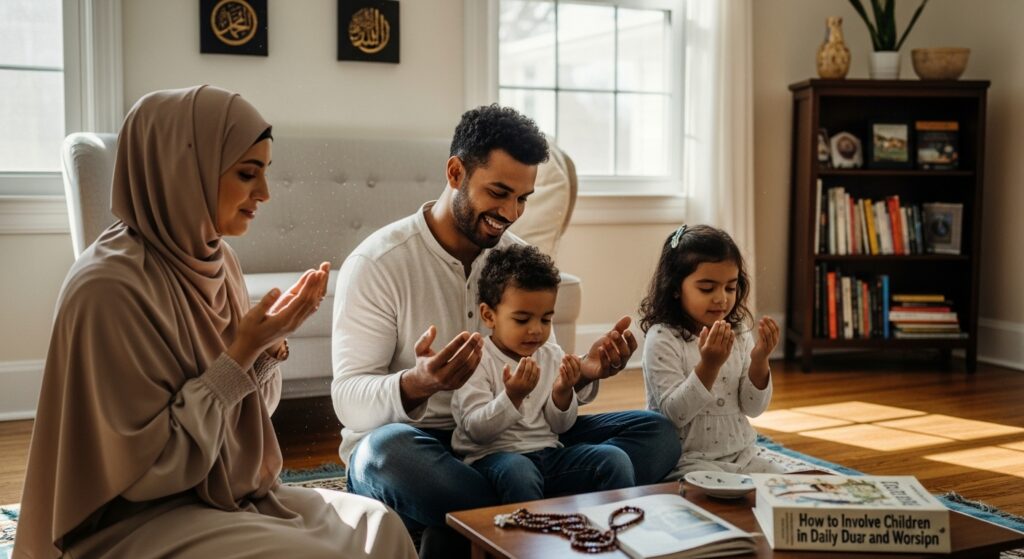
Why Teaching Dua and Worship to Children Is Important in Islam
Teaching children dua and worship helps shape their hearts and character from an early age. When children learn to remember Allah in daily moments, they begin to feel safe, hopeful and guided. Simple duas teach them that Allah is always near and that they can turn to Him in every situation.
Islam places responsibility on parents to guide their children with care and kindness. Early exposure to worship helps children develop positive habits and a strong moral foundation. These habits grow naturally as children grow older and help them stay connected to Allah during both easy and difficult times.
Teaching worship early also makes faith a normal part of life, not something distant or forced. When children grow up seeing prayer and dua at home they carry these practices with confidence and love into their future.
Make Daily Dua Part of Everyday Life
Involving children in dua and worship becomes easier when it is part of daily routines. Everyday moments can become natural opportunities to remember Allah. Simple acts like saying a short dua before meals, bedtime or leaving the house help children understand that worship is part of life, not just a task.
Natural Exposure Instead of Formal Lessons
Instead of forcing long or complicated lessons let children observe and imitate. Watching parents pray listening to short duas, and repeating them occasionally is very effective. Natural exposure makes worship feel easy and joyful.
Turn Daily Moments into Dua Moments
Children learn quickly when they see parents making dua in normal situations. For example:
- Saying “Bismillah” before eating
- Making a small dua when going out or coming home
- Thanking Allah after completing a task
These moments teach children that Allah is always near and listening. Over time children begin to make these prayers naturally.
Simple Daily Duas Children Can Learn First
- Before eating: “Bismillah”
- Before sleeping: “Bismika Allahumma amutu wa ahya”
- Leaving the house: “Bismillah, tawakkaltu ‘ala Allah”
These short and meaningful duas are easy for children to remember. They also teach the habit of turning to Allah in every situation.
Read also How to Start Noorani Qaida for Kids
Repetition and Consistency in Learning Dua
Repetition is key for children. Saying a dua together daily helps children memorize it faster. Even if they forget, gentle reminders work better than pressure. Consistent practice creates lifelong habits and strengthens their love for Allah.
Involving Children in Salah Gently
Teaching children to pray should be gentle and patient. Salah is a central part of worship, but young children cannot always follow formal prayers perfectly. Parents can guide children by showing them how to pray and allowing them to learn step by step.
Encouraging Prayer Without Pressure
Children respond best when they feel motivated, not forced. Start by letting them watch family prayers. Invite them to stand beside you, imitate simple actions or repeat short phrases. Gradually, they will participate more confidently.
Praying Together as a Family
Praying together as a family helps children feel included. When they see parents and siblings praying they understand that salah is a natural part of daily life. Family prayers also create emotional bonds and make worship a joyful activity.
Teaching Wudu as a Fun Learning Activity
Wudu or ablution, can be a fun way for children to learn about cleanliness and preparation for prayer. Show them the steps slowly, let them practice at their own pace, and turn it into a playful routine. This helps children enjoy the process and remember that prayer is important.
Tips for Parents
- Keep prayers short and simple for younger children.
- Use clear easy instructions and encourage imitation.
- Praise effort, not perfection, to build confidence and love for worship.
- Make family salah a consistent routine so children learn naturally.
Use Stories to Teach Worship and Faith
Children love stories. Stories help them understand ideas in a way that is fun and memorable. In Islam, stories of the prophets and righteous people are perfect for teaching faith, dua and good character.
Children Connect With Stories Emotionally
When children hear about how the prophets trusted Allah, prayed in difficult times, or helped others, they feel inspired. Stories make abstract ideas, like faith and trust in Allah, easier to understand. They also create emotional connections that stay in a child’s memory.
Stories of Prophets That Inspire Worship
- Prophet Ibrahim (AS): Taught children to rely on Allah and pray in all situations.
- Prophet Ismail (AS): Showed patience, obedience, and trust in Allah.
- Prophet Muhammad ﷺ with Children: Encouraged learning through love, kindness and practical example.
Parents can read these stories in books, narrate them during bedtime or explain them in simple language. Linking the stories to daily worship helps children see that dua and prayer are important in real life.
Tips for Parents
- Keep stories short and age appropriate.
- Highlight the actions that show trust in Allah like making dua or praying.
- Encourage children to ask questions and repeat lessons in their own words.
- Relate story lessons to everyday activities to make learning meaningful.
Create a Worship-Friendly Home Environment
Creating a home that encourages worship helps children learn naturally. First, make your home a place where remembrance of Allah is part of daily life. For example, display Islamic books, posters or artwork with simple reminders of duas and prayer times.
Next, use visual and auditory cues to guide children. For instance, play short nasheeds or dua recordings during quiet times. This familiarizes children with the sound of worship and makes it enjoyable.
Additionally, organize a small clean space for prayer. When children see a dedicated area, they understand that worship is important and special. Also, involve children in simple preparations like arranging prayer mats or helping set up for family salah.
Moreover, encourage routines. By having fixed times for prayer and dua, children learn consistency and see worship as a natural part of daily life. Finally, celebrate small successes. Whenever children complete a dua or participate in salah, praise them gently. This reinforces positive habits and creates love for worship.
Using Resources Effectively
- Books: Choose age appropriate storybooks about prophets and Islamic teachings.
- Nasheeds: Short and simple songs help children memorize duas.
- Visual aids: Posters with short duas or prayer steps make learning interactive.
Lead by Example – Children Learn What They See
Children often learn more from what they see than what they are told. Therefore, parents play a crucial role as spiritual role models. When children see their parents making dua, praying regularly, and remembering Allah throughout the day, they naturally want to do the same.
For example, if a child sees a parent thanking Allah after meals or making dua in difficult moments, they learn that worship is a part of daily life. Similarly, when parents involve children in small acts of worship, children imitate these habits and enjoy participating.
Moreover, parents do not need to be perfect. Even simple, sincere acts of worship performed consistently leave a lasting impression. In fact, children often remember these small daily actions more than long lectures.
Additionally, sharing stories of your own faith journey, like how making dua helped you or how prayer brings peace, encourages children to connect emotionally with worship. As a result, children grow up feeling that worship is natural, meaningful and a source of comfort.
Tips for Parents
- Be consistent in daily worship, even in small actions.
- Talk about the benefits of dua and prayer in simple words.
- Include children in family worship to create shared experiences.
- Show gratitude and patience in front of children to reinforce good habits.
What the Hadith involve children in daily dua
The Hadith of Prophet Muhammad ﷺ provide clear guidance for parents on teaching children dua and worship.
For instance the Prophet ﷺ said:
“Teach your children to pray when they are seven years old, and beat them for it at ten.”
(Sunan Abu Dawood 495, Sunan al-Tirmidhi 291) This Hadith shows that early introduction is important but the approach should be gradual and age appropriate. Parents are encouraged to start with love and guidance, not harshness.
Additionally, the Prophet ﷺ often involved children in worship. He would pray with them let them imitate his actions and explain short duas in simple words. This demonstrates the power of learning through observation and example.

Frequently Asked Questions (FAQs) about involve children in daily dua
Children can start learning simple duas as early as two or three years old. Begin with short and meaningful prayers, like “Bismillah” before eating. Gradually, increase their understanding and participation as they grow.
You can teach children the meanings in your language while they memorize the Arabic words. Start with simple phrases, and over time explain the meanings. This helps them connect with Allah emotionally not just verbally.
Children are not held accountable for wajib (obligatory) prayers until they reach puberty. The goal is to teach habits and love for Allah, not to punish. Consistent encouragement helps them adopt these habits naturally.
Keep sessions short and age-appropriate. For toddlers, 1–5 minutes of dua or simple prayer is enough. School-age children can gradually increase their participation. Consistency is more important than length.
Use stories from the prophets to explain lessons
Include family prayers
Sing short nasheeds or dua songs
Praise effort and celebrate small achievements
Conclusion about involve children in daily dua
Teaching children daily dua and worship is one of the most important gifts parents can give. From a young age children learn by watching and imitating. Therefore, parents play a key role in shaping their faith through love, patience and gentle guidance.
Starting with short, simple duas, involving children in family prayers and creating a positive worship environment helps children connect with Allah naturally. Also, using stories, visual aids and encouragement makes learning enjoyable and meaningful.
Remember, consistency matters more than perfection. Small daily steps, repeated with love help children develop lifelong habits of worship. By following these tips, parents can raise children who love Allah, enjoy prayer and grow with confidence in their faith.
Read also How to Teach Salah to Kids
Understanding the Quran brings peace, guidance and wisdom. If you want to read the Quran with proper Tajweed or join a Hifz course visit our website and join us free trial today.