Can Muslims celebrate New Year? Explore the Islamic perspective, scholarly views, halal limits, and guidance from Quran and Hadith.
Introduction
Every year, people across the world welcome the New Year with excitement. They celebrate with fireworks, parties, and messages of hope for a better year ahead. This global celebration often appears joyful and harmless. However, for many Muslims, it raises an important and serious question.
Many Muslims feel unsure about this topic. Some ask whether joining New Year celebrations is allowed in Islam, while others worry it may go against Islamic teachings. Because people share different opinions on social media and websites, this confusion continues to grow.
This article clearly explains can Muslims celebrate New Year from an Islamic point of view. It uses guidance from the Quran and authentic Hadith to explain what Islam teaches about celebrations. By reading this article, you will gain a clear and simple understanding of the Islamic ruling and learn how Muslims should approach the New Year in a way that pleases Allah.
What Is New Year and Why Is It Celebrated?
The New Year marks the beginning of a new calendar year. Most countries follow the Gregorian calendar, which starts on January 1. People see this day as a fresh start. They reflect on the past year and make plans for the future.
Many cultures celebrate the New Year in different ways. Some people enjoy fireworks and parties, while others spend time with family and friends. In many places, New Year celebrations focus on joy, hope, and new goals. However, these celebrations did not begin as purely cultural events.
Historically, New Year celebrations connected to ancient traditions and religious beliefs. Over time, many societies changed them into social and cultural events. Even today, some customs still carry religious meanings, while others remain simple traditions.
Understanding this background helps Muslims think carefully about New Year celebrations. Islam encourages believers to know the origin of customs before following them. This awareness makes it easier to decide whether a practice aligns with Islamic values or not.
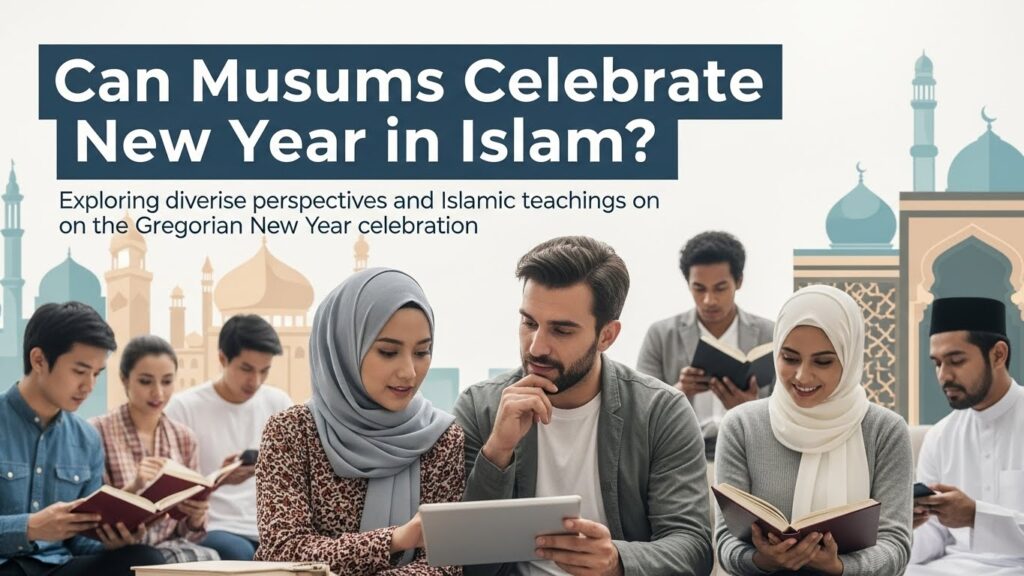
Can Muslims Celebrate New Year According to Islam?
Islam encourages Muslims to live with awareness and purpose. When it comes to celebrations, Islam asks believers to follow clear guidance instead of simply following trends. For this reason, many Muslims ask whether taking part in New Year celebrations is acceptable.
In general, Islam does not encourage Muslims to celebrate New Year as a religious or festive event. The New Year does not hold any religious value in Islam, and Muslims already have two blessed festivals given by Allah. Celebrating another special day as a festival can slowly blur the clear identity that Islam protects.
Many scholars explain that New Year celebrations often include practices that Islam does not allow. These may include alcohol, music, free mixing, and behaviour that goes against modesty. Even when someone avoids these actions, celebrating the New Year as a festival still resembles non-Islamic religious traditions.
However, Islam also teaches fairness and intention. A Muslim who does not take part in parties or rituals but simply remains aware of the date does not commit a sin. Using the New Year as a time for personal reflection or setting halal goals does not conflict with Islamic teachings, as long as a person does not treat it as a religious celebration.
Is Celebrating New Year Haram in Islam?
Many Muslims want a clear answer to this question. They ask whether celebrating New Year is completely haram or simply discouraged. To understand this properly it is important to look at how Islamic scholars explain this issue.
Most scholars agree that celebrating New Year as a religious or festive event is not allowed in Islam. Islam has already given Muslims two special festivals, Eid al-Fitr and Eid al-Adha. Adding another festival that comes from non Islamic traditions goes against the teachings of Islam.
Scholars also point out that Muslims to celebrate often involve actions that Islam clearly forbids. These include drinking alcohol, listening to inappropriate music, free mixing, and wasting time in sinful activities. When such actions become part of a celebration, they make it clearly haram.
Even if someone avoids these sins, scholars still discourage celebrating New Year as a special occasion. This is because it resembles religious practices of other communities. Islam teaches Muslims to protect their faith and avoid copying religious customs that do not belong to Islam.
However, simply knowing that a new year has started or using the time to reflect on one’s life does not count as haram. Islam encourages self accountability, repentance, and making positive changes at any time of the year.
Islamic New Year
Muslims have their own New Year, called Hijri New Year, which begins on 1st Muharram of the Islamic lunar calendar. This day marks a fresh start for every believer. Unlike the Gregorian New Year, Muslims do not celebrate with fireworks or parties. Instead, they reflect on the past year, pray, and seek Allah’s guidance for the year ahead.
During Hijri New Year, Muslims remember the blessings of Allah and make intentions to improve their faith and character. Scholars encourage believers to pray, read Quran, and plan good deeds. This approach makes the New Year a time for spiritual growth rather than worldly celebration.
By observing Muharram properly, Muslims start the year with purpose, strengthen their connection with Allah, and focus on self-improvement. It is a peaceful and meaningful way to welcome a new year according to Islam.
Read also Importance of 10th Muharram in Islam
What Activities Are Considered Haram on New Year?
While Islam allows Muslims to reflect and plan for the future, some common New Year activities can clearly go against Islamic teachings. It is important to know which actions to avoid so that celebrations stay within halal limits.
Drinking Alcohol
Many New Year parties include alcohol, but Islam strictly forbids drinking. Consuming alcohol is haram, and taking part in gatherings where it is present can lead to sin. Muslims should stay away from such events to protect their faith.
Free Mixing Between Men and Women
Islam encourages modesty and proper behaviour between men and women. Parties with free mixing, dancing, or inappropriate behaviour are not allowed. Muslims must maintain limits in all social gatherings.
Immoral or Excessive Behaviour
Some New Year celebrations involve gambling, loud music, or actions that lead to wasteful behaviour. Islam teaches self-control and responsible use of time. Engaging in sinful or excessive activities is forbidden.
Imitating Non-Islamic Religious Practices
Muslims to celebrate as a religious festival or copying rituals from other faiths is not allowed in Islam. Muslims should avoid any action that resembles worship or religious practices outside Islam.
Quranic Guidance on Time and Reflection
The Quran emphasizes the importance of time and using it wisely. One of the most relevant verses is from Surah Al-Asr (103:1-3): “By time, indeed, mankind is in loss, except for those who have believed and done righteous deeds and advised each other to truth and patience.”
This verse reminds Muslims that every moment is valuable. Time is not just for celebrations or enjoyment; it is for faith, reflection, and good deeds. Islam encourages believers to use time in ways that bring them closer to Allah, rather than wasting it on activities that go against His teachings.
Hadith About Time, Reflection, and Good Deeds
The Prophet Muhammad ﷺ gave many teachings that show the importance of using time wisely and doing good deeds. These Hadith help Muslims understand how to live a meaningful life.
Value of Time (H3)
The Prophet ﷺ said:
“There are two blessings which many people waste: health and free time.”
(Sahih al-Bukhari) This Hadith reminds us that time is a trust from Allah. Every moment should be used for beneficial actions, like prayer, learning, helping others, and self-improvement. Wasting time on sinful or meaningless activities is discouraged.
Common Questions About Muslims and New Year
Yes, Muslims can greet others politely without joining religious or festive rituals. Saying “Happy New Year” as a simple wish is allowed, as long as it does not involve celebrating the festival in a religious way.
Muslims should avoid parties that include haram activities like alcohol, free mixing, or immoral behavior. Attending safe gatherings with family or friends, without sin, is generally allowed.
Watching fireworks itself is not haram, but it should not lead to sin. If it encourages sinful behavior or imitation of religious festivals, it should be avoided.
Yes, making resolutions for self-improvement is encouraged. Muslims can set goals to pray more, help others, or improve character. Using New Year as a reminder for personal growth is fully acceptable in Islam.
Yes, Islam discourages celebrating New Year as a festival. It is not part of Islamic teachings, and adding it as a religious or special celebration can conflict with faith.
Conclusion
In Islam, Muslims are guided to use their time wisely and follow clear rules about celebrations. The New Year is not an Islamic festival, so celebrating it as a special religious event is discouraged. Scholars explain that joining parties or rituals that involve forbidden actions goes against Islamic teachings.
However, Muslims can use the New Year wisely. They can reflect on the past year, set good goals, pray more, and increase acts of kindness. Islam encourages self improvement, gratitude, and planning for a better future. These actions bring real benefit and earn Allah’s pleasure.
By focusing on reflection and positive change, Muslims can make the New Year a moment of growth rather than a festival. Remember, success in life comes from faith, righteous deeds, and using time carefully. Avoid sin, stay mindful of Allah, and make every day count.
Celebrating in a way that respects Islamic values allows Muslims to welcome the new year with purpose, not just parties or traditions. Make intentions clear, act wisely, and start the year by pleasing Allah and improving yourself.
Start the New Year by pleasing Allah, improving yourself, and making every moment count.
👉 Strengthen your faith with guided learning join our Online Quran Classes and book a free trial today.
Explore:
- Online Quran Classes
- Tajweed Course
- Quran for Beginners
- Free Trial / Contact Us
Good teaching