
Discover the complete history of Al Aqsa Mosque, its origins, Islamic importance, key events, and why it remains sacred to Muslims worldwide.
Introduction
Jerusalem is a city where faith, history, and devotion come together in a powerful way. For centuries, it has remained a spiritual center for millions of believers around the world. Among its most sacred landmarks stands Al Aqsa Mosque, a place that holds deep religious and historical meaning for Muslims. From daily prayers to life changing spiritual events, this mosque continues to inspire hearts across generations.
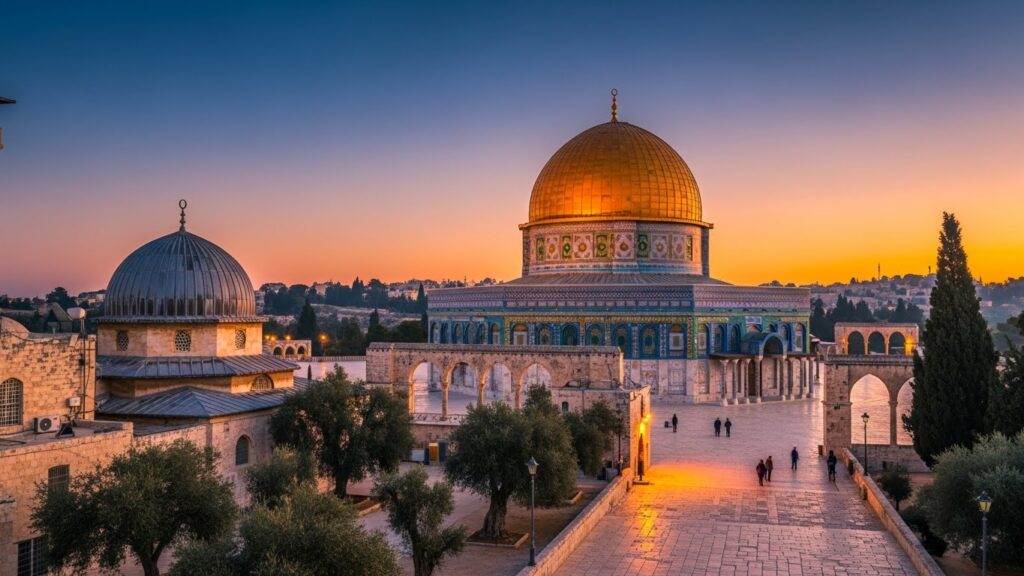
Al Aqsa Mosque is located within the sacred compound of Al-Haram Al-Sharif in Jerusalem. It is not only one of the oldest places of worship in Islam, but also the third holiest mosque after Masjid Al Haram and Masjid An-Nabawi. Many people confuse Al Aqsa Mosque with the Dome of the Rock, yet the entire compound carries immense importance in Islamic belief and history.
Understanding Al Aqsa Mosque history matters more today than ever before. The mosque is closely connected to major events in Islam, including the first direction of prayer and the miraculous journey of Isra and Mi’raj. At the same time, Al Aqsa continues to face challenges in the modern world, making it essential to learn its true background and significance from authentic sources.
To truly appreciate the value of this sacred site, it is important to explore how Al Aqsa Mosque was established, how it developed over time, and why it remains central to Islamic faith. By looking back at its historical roots, we gain a clearer understanding of its lasting spiritual and religious importance.
What Is Al Aqsa Mosque?
To begin with, Al Aqsa Mosque is one of the most sacred places in Islam. It is located in the heart of Jerusalem, inside the blessed area known as Al-Haram Al-Sharif. For Muslims around the world, this site holds deep spiritual value and strong emotional importance.
In simple words, the name Al Aqsa means “the farthest mosque.” This name comes directly from the Quran and refers to the great journey of Isra and Mi’raj. During this journey, Prophet Muhammad ﷺ traveled from Makkah to Jerusalem by the will of Allah. Because of this event, Al Aqsa Mosque became closely linked with Islamic faith and belief.
However, many people misunderstand what Al Aqsa Mosque truly is. Al Aqsa is not only the silver-domed prayer hall. Instead, it refers to the entire sacred compound. This area includes the main prayer mosque, the Dome of the Rock, open courtyards, and several smaller prayer spaces. Together, all of these form what Muslims call Masjid Al Aqsa.
Moreover, Al Aqsa Mosque served as the first Qibla of Muslims. At the beginning of Islam, Muslims prayed toward Jerusalem before the direction changed to the Kaaba in Makkah. This fact alone shows the early and lasting importance of Al Aqsa in Islamic history.
Overall, understanding what Al Aqsa Mosque truly represents helps clear confusion and builds stronger awareness. With this clear foundation, we can now move forward and explore the early history of Al Aqsa Mosque and how it began.
Early History of Al Aqsa Mosque
To understand Al Aqsa Mosque history, we must look back to the earliest days of human worship. According to Islamic tradition, Al Aqsa Mosque is among the first places built on earth for the worship of Allah. This shows that its roots go back thousands of years and long before the time of Islam.
Many scholars believe that Prophet Adam (AS) first laid the foundation of Al Aqsa Mosque. Later on, Prophet Ibrahim (AS) visited this blessed land and renewed its importance as a place of pure worship. Because of this, Jerusalem became a center of faith for many prophets and believers.
After many years, Prophet Sulaiman (AS) rebuilt and strengthened the mosque. He prayed to Allah that anyone who came to this place only for worship would be forgiven. This special prayer increased the spiritual value of Al Aqsa Mosque and made it a symbol of mercy and guidance.
Over time, Al Aqsa Mosque remained a sacred site for worship, even before the arrival of Prophet Muhammad ﷺ. Prophets and righteous people continued to honor this land, keeping its message of faith alive.
In this way, the early history of Al Aqsa Mosque clearly shows its deep connection with Tawheed and prophethood. Now, we can move forward to understand the role of Al Aqsa Mosque during the time of Prophet Muhammad ﷺ.
Al Aqsa Mosque in the Time of Prophet Muhammad ﷺ
During the time of Prophet Muhammad ﷺ, Al Aqsa Mosque history gained even greater importance. This sacred mosque became directly connected to key events that shaped Islamic belief and practice. Because of this, Al Aqsa holds a special place in the hearts of Muslims.
At the beginning of Islam, Muslims prayed facing Al Aqsa Mosque. In other words, it served as the first Qibla of Muslims. For several months in Madinah, believers turned toward Jerusalem during prayer. This clearly shows the early spiritual link between Islam and Al Aqsa Mosque.
In addition, Al Aqsa Mosque is closely tied to the miraculous event of Isra and Mi’raj. On this blessed night, Allah took Prophet Muhammad ﷺ from Masjid Al Haram in Makkah to Al Aqsa Mosque. There, he led all the prophets in prayer. After that, he ascended to the heavens by Allah’s command. This event raised the status of Al Aqsa Mosque and confirmed its sacred position in Islam.
The Quran directly mentions this journey in Surah Al-Isra. This divine reference proves the importance of Al Aqsa Mosque and protects its place in Islamic belief forever.
Because of these events, Al Aqsa Mosque became a symbol of unity, faith, and divine connection. Next, we will explore what happened to Al Aqsa Mosque after the Islamic conquest of Jerusalem.
Al Aqsa Mosque After the Islamic Conquest
After the passing of Prophet Muhammad ﷺ, Al Aqsa Mosque history entered a new and important phase. In 637 CE, Muslims peacefully entered Jerusalem during the rule of Caliph Umar ibn Al Khattab (RA). This moment marked a turning point for Al Aqsa Mosque and the city as a whole.
When Caliph Umar (RA) arrived in Jerusalem, he showed great respect for all holy places. He personally visited the Al Aqsa compound and helped clean the area. Soon after, he ordered the construction of a simple prayer space so Muslims could worship there with ease. This action reflected the Islamic values of humility, care, and justice.
Later on, the Umayyad caliphs played a major role in developing the mosque. Caliph Abd al Malik and his son Al Walid strengthened and expanded Al Aqsa Mosque. They also built the Dome of the Rock nearby. As a result, the entire area became a well organized center of worship and learning.
Over time, Al Aqsa Mosque continued to serve as a place of prayer, education, and community life. Muslims from different regions visited Jerusalem to worship and learn. In this way, Al Aqsa Mosque grew in both spiritual and historical importance.
Religious Importance of Al Aqsa Mosque in Islam
The religious value of Al Aqsa Mosque history holds a very special place in Islam. This mosque is the third holiest site for Muslims, after Masjid Al Haram in Makkah and Masjid An-Nabawi in Madinah. Because of this ranking, Al Aqsa Mosque carries deep spiritual meaning for believers.
One major reason for its importance is its connection with many prophets. Prophets lived, prayed, and preached in this blessed land. As a result, Al Aqsa Mosque became a center of guidance and faith long before Islam spread across the world.
In addition, praying in Al Aqsa Mosque brings great reward. Prophet Muhammad ﷺ encouraged Muslims to travel for worship to only three mosques, and Al Aqsa Mosque is one of them. This shows its high status and lasting value in Islamic teachings.
Al Aqsa Mosque also reminds Muslims of unity and obedience to Allah. It connects the early days of Islam with the present time. Every prayer offered there reflects faith, patience, and devotion.
Because of its strong spiritual role, Al Aqsa Mosque continues to inspire Muslims everywhere. Next, we will look at Al Aqsa Mosque in modern history and why it remains in global focus today.
Al Aqsa Mosque in Modern History
In modern times, Al Aqsa Mosque history has taken on new meaning and importance. While the mosque remains a sacred place of worship, it has also become closely connected to major events in the Muslim world. Because of this, Al Aqsa Mosque continues to draw global attention.
During the twentieth century, political changes greatly affected Jerusalem. As a result, Al Aqsa Mosque faced many challenges related to access, safety, and preservation. Even so, Muslims remained deeply attached to this holy site and continued to protect its religious identity.
Despite these difficulties, Al Aqsa Mosque has never lost its spiritual role. Worshippers still gather there for daily prayers, especially during Ramadan. These moments show strong faith and unity among Muslims from different backgrounds.
Today, Al Aqsa Mosque stands as a symbol of patience and resilience. It reminds Muslims of their shared history and responsibility toward this sacred place. Understanding its modern history helps explain why Al Aqsa Mosque remains so important in the present day.
Important Facts About Al Aqsa Mosque
Al Aqsa Mosque is full of history and significance. Here are some key facts that make it one of the most important places in Islam:
- Location: It is located in the Old City of Jerusalem, within the Al-Haram Al-Sharif compound.
- Size: The mosque compound covers about 35 acres, making it one of the largest mosque areas in the world.
- Capacity: Thousands of worshippers can pray there at the same time, especially during Ramadan and special occasions.
- Historical Significance: Al Aqsa was the first Qibla of Muslims and the site of the Isra and Mi’raj.
- UNESCO Status: The mosque is part of the Old City of Jerusalem, a UNESCO World Heritage site.
- Architectural Beauty: Over centuries, different rulers repaired and expanded the mosque, giving it a unique design combining various Islamic architectural styles.
Hadith
Reward of Praying at Al Aqsa
The Prophet Muhammad ﷺ said:
“One prayer in Al-Masjid Al-Aqsa is better than a thousand prayers elsewhere, except for Al-Masjid Al-Haram.”
(Musnad Ahmad, Hadith 6785) Explanation: This Hadith shows the immense reward for praying at Al Aqsa Mosque. It emphasizes its spiritual significance for every Muslim.
Questions (FAQ) About Al Aqsa Mosque
Yes, Al Aqsa Mosque is mentioned in Surah Al-Isra (17:1). The verse describes the miraculous night journey (Isra) of Prophet Muhammad ﷺ from Masjid Al Haram in Makkah to Al Aqsa Mosque in Jerusalem.
Al Aqsa Mosque is the third holiest site in Islam. It served as the first Qibla, is linked to the Isra and Mi’raj, and has been a center of worship for prophets and Muslims for centuries.
The Dome of the Rock is inside the Al Aqsa compound but is a separate structure. Both are part of the sacred Al-Haram Al-Sharif area, which is often referred to as Al Aqsa.
Yes, non-Muslims can visit certain areas of the Al Aqsa compound during specific visiting hours. However, non-Muslims are not allowed to enter the main prayer halls.
Conclusion
Al Aqsa Mosque holds a unique and sacred place in Islam. Its rich history connects the earliest prophets to the time of Prophet Muhammad ﷺ and continues to inspire millions of Muslims today. From being the first Qibla to witnessing the miraculous event of Isra and Mi’raj, Al Aqsa Mosque is a symbol of faith, devotion, and unity.
Over centuries, despite challenges and changes, the mosque has remained a center of worship, learning, and spiritual reflection. Understanding Al Aqsa Mosque history helps us appreciate its religious, historical, and cultural importance. It reminds Muslims of their shared heritage and the need to preserve this sacred site for future generations.
Visiting Al Aqsa Mosque or learning about it strengthens faith and deepens the connection with Allah. Its story continues to inspire devotion, hope, and reverence across the Muslim world.
If you found this guide on Al Aqsa Mosque history helpful, share it with your family and friends to spread awareness. Learn more about Islamic heritage by exploring other sacred mosques and historical sites. Keep your faith strong and inspire others by sharing the knowledge of this blessed mosque.