What are 5 interesting facts about Ramadan? Discover amazing facts about fasting, charity, and the spiritual beauty of the holy month of Ramadan.
A Fast Introduction to the Month of Ramadan.
The ninth month in the Islamic calendar is Ramadan. This month is highly respected and followed by Muslims all over the world. It is a period when worship, good character, and a relationship with Allah are given more attention by believers.
Fasting is one of the principal activities during Ramadan. Muslims who are of age do not eat at all during the day until the evening. They do not eat, drink, or indulge in other human needs during this period. They start the fast at the time of the Fajr prayer and break it at Maghrib prayer.
The Muslims typically break their fast at dawn with dates and water, as it is the practice of the Prophet Muhammad ﷺ.
During Ramadan, fasting does not only concern avoiding the consumption of food and beverages. The actions and words of the Muslims are also attempted to be restricted. They strive to stop being angry, gossiping, and engaging in other negative habits. On the contrary, they are concerned with kindness, patience, and service to others.
Ramadan is also closely related to the Quran. Muslims are convinced that it is in this blessed month that the first verses of the Quran were revealed. Due to this reason, a considerable number of Muslims spend more time reading and meditating on the Quran during Ramadan.
Ramadan, to the millions of Muslims, is a period that can be described as a year of spiritual soul-searching, prayer, and charity, as well as self-enrichment. It makes people grow stronger in faith and develop positive habits that could be maintained even at the end of the month.
Read also Things That Break the Fast in Islam
What Are 5 Interesting Facts About Ramadan?
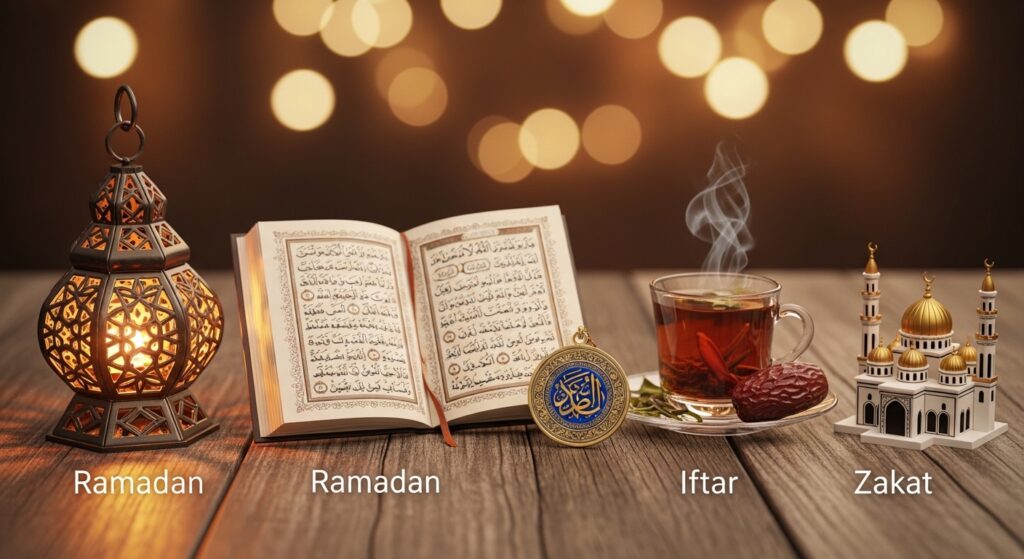
Ramadan is a very special season amongst Muslims across the world. At the time when the sun is setting, the families are gathered and are waiting to break fast. The table is packed with dates, water, and basic food.
Mosques in most locations receive people who gather to pray to remember Allah. Such moments provide a calm and happy environment, which most of the Muslims anticipate annually.
According to Muslims, Ramadan is one of the most blessed months of Islam. They also fast in the morning until evening during this month. They also take more time to pray, read the Quran, and try to do more good.
Many individuals contribute to charity, assist the poor, and strive to improve their character. Due to this fact, Ramadan is the period of spiritual development and faith strengthening.
The majority of the population is aware of the fact that Muslims fast during Ramadan. Nevertheless, fasting is not all about Ramadan. The month is very historic with significant traditions and numerous attractive facts which are unknown to many.
Therefore, what are 5 facts that make Ramadan so interesting? In this article, you will get to know some simple and surprising facts that demonstrate the beauty and significance of Ramadan to Muslims all over the world.
1. Ramadan is the Month the Quran was initially revealed.
The fact that Ramadan has a close association with the Quran is one of the most vital facts about this holy period among Muslims. According to the Muslims, it is during this holy month that the Holy Quran was first revealed to the Prophet Muhammad ﷺ. It is due to this fact that Ramadan is very spiritual to the Muslims the world over.
The initial revelation occurred at the Cave of Hira, close to Makkah. The Prophet ﷺ was brought the first message of Allah by Angel Jibreel. This was the start of the revelation of the Quran, which was a few years ago. To Muslims, this incident causes the month of Ramadan to be a reminder of the guide used by the Quran and to reinterpret its message.
Most Muslims, particularly during Ramadan, endeavour to read the Quran on a daily basis. Some attempt to finish the whole Quran within the month. Special night prayers known as Taraweeh are also performed in mosques, whereby long sections of the Quran are read. This aids the believers to listen and reflect on the words of Allah.
Ramadan is also characterised by another event called Laylatul Qadr or the Night of Power. Muslims consider that this night was the first when the Quran was revealed. It is a very blessed night in Islam, and Muslims use it to pray, recite, and offer heartfelt dua.
The role of this night is described in the Quran by Allah:
The Night of Decree is a thousand months better.
(Surah Al-Qadr 97:3)
This verse displays how unique this night is to believers.
2. Muslims fast for various hours all over the world.
During the month of Ramadan, Muslims all over the world will fast throughout the entire day, starting at dawn till sunset. Nevertheless, not all countries have the same number of fasting hours. The duration of the fast is determined by the place that an individual lives and the duration of daylight in that area.
In other countries close to the equator, Muslims fast between 11 and 13 hours. The length of fasting can greatly increase in other parts of the world, particularly in the north. Whereas in Scandinavian countries like Norway, Sweden or Iceland, they occasionally have as many as 18 to 20 hours of fasting in the summertime.
This is due to the fact that Ramadan is based on the Islamic calendar. Each year, the Islamic calendar shifts some 10-11 days. Due to this change, Ramadan occurs during the summer, and in other cases it occurs during the winter. Consequently, the hours of fasting vary with each year in most nations.
Although in certain areas, the hours of fasting may be very lengthy, Muslims will always fast with patience and commitment. They get ready by getting up early to eat suhoor, which is breakfast before dawn. This meal keeps them healthy, and they are concentrated throughout the day.
At the time when the sun sets, Muslims end the fast with iftar. Communities and families sit together and enjoy food together and praise Allah that they have the strength to finish one more day of fasting.
This day in, day out routine endows Muslims with a great feeling of unity and gratitude. a period where Muslims revive their faith as well as improve their connection with the word of Allah.
3. Ramadan is referred to as the Month of charity.
Ramadan teaches Muslims to consider other people and assist them. This is a holy month when most of the people give more acts of charity and kindness. They seek out ways to help the poor, feed them, and leave a positive imprint on the communities they are in.
Another significant charity in Islam is Zakat, which is mandatory for Muslims who are wealthy enough. Most Muslims prefer to give their Zakat in the month of Ramadan since they feel that good deeds are more rewarding in this holy month.
Sadaqah is a voluntary charity among the Muslims as well. This kind of giving may consist of money, food, clothes, or any assistance that will be helpful to a person in need. A great number of families give their donation to people who are fasting and to those who have a community iftar, in order to share the blessings of Ramadan.
Special programs are usually organised in mosques and charities during Ramadan. They gather donations, deliver food packages, and provide help to families unable to afford basic needs. These activities contribute to the expansion of goodwill and the community spirit.
During Ramadan, Muslims are reminded that it is not merely about being deprived of food and drink. It also ingrains the feeling of compassion in people towards the people who experience hunger on a daily basis. Muslims attempt to make others feel better and hopeful in this special month by means of charity and generosity.
4. Ramadan shifts by a year every year.
In the normal calendar, Ramadan does not necessarily fall on the same date every year. This is due to the fact that Muslims use the Islamic lunar calendar, which is determined by the movement of the moon.
The Islamic year has a difference of 10-11 days from the Gregorian calendar adopted by the majority of the world. Due to this variation, Ramadan comes earlier each year. Indicatively, this year, when Ramadan starts in March, it can be in early March or even in February the following year.
Ramadan goes through each season in the long run. On some occasions, the Muslims would fast on long summer days, and on other occasions, they would fast on short winter days. This modification provides Muslims with various experiences of fasting in their lives.
Such an annual change also helps Muslims to remember that Ramadan is not tied to a particular season. Rather, it is centred on worship, patience and devotion to Allah. Regardless of the time that the month comes, the Muslims eagerly await Ramadan and ready themselves to fast, pray, and do good.
5. Ramadan Teaches Self-Discipline and Soul Development.
Ramadan aids Muslims to enhance their nature and faith. Not only is fasting about not eating. It also enables individuals be able to manage their thoughts, behaviours, and habits during the day.
During Ramadan, Muslims are preoccupied with not being angry, gossiping, and engaging in other negative practices. They pray more, read the Quran and say dua. The practices make them grow to be patient, thankful and disciplined.
The month also challenges Muslims to be considerate of others and treat them kindly. Muslims are taught to be generous and loving by providing charity, assisting those in need and sharing food.
The month of Ramadan makes one reflect on oneself. People meditate about their lives, become better in their habits, and become closer to Allah. At the end of the month, most of them have been revitalised spiritually, are more disciplined and are more connected with their faith.
This is the reason why Ramadan is not merely a fasting month. It is a month of character building, stronger communities and assisting Muslims in spiritual growth annually.
Read also Which Dua to Read in Ramadan?
A Beautiful Hadith About interesting facts about Ramadan
Prophet Muhammad ﷺ said:
“Whoever fasts during Ramadan out of sincere faith and hoping for reward from Allah, all his past sins will be forgiven.”
(Sahih Bukhari, Hadith 38)
This hadith shows the true value of fasting in Ramadan. It is not only about abstaining from food and drink but also about purifying the heart, controlling desires, and increasing good deeds.
Muslims follow this guidance by focusing on worship, being kind to others, and avoiding harmful actions. The month becomes a time to grow spiritually, strengthen faith, and seek forgiveness from Allah.
By understanding and practising this teaching, Muslims experience the full blessings of Ramadan and the rewards promised by Allah for sincere devotion.
Last Meditations on the Beauty of 5 interesting facts about Ramadan
Ramadan is far more than half a year of fasting. It is a spiritual phase of development, self-control and community cohesiveness. During this month, Muslims evolve their faith, read the Quran, pray more and extend their goodwill to others.
We have discussed 5 interesting facts about Ramadan: the Qur’an was revealed first, the time of fasting in different countries differs, the charity is more, the months change every year, and Ramadan also teaches moderation and self-development. All these facts point to the more important meaning of this holy month.
Ramadan challenges Muslims to look back into their lives and better themselves and their character, as well as assist those who are needy. It unites families and communities, which brings happiness, gratitude, and spiritual gratification.
Ramadan is a month of blessings, thought, and revitalisation to Muslims all over. By adhering to the practices in good faith, the believers enhance their relationship with Allah and take the teachings of Ramadan with them all year round.
“If you want to learn the Quran with proper Tajweed, click the link below and start using our services.” courses/