
Can women visit graves in Islam? Learn the Islamic ruling with Qur’an, hadith, and scholars’ opinions, including conditions and proper etiquette.
Introduction
Griefing is a common Islamic tradition. By visiting graveyards, Muslims remind about death, pray to the dead, and think about the Hereafter. This practice was promoted by the Prophet Muhammad ﷺ since it helps the believers to be aware of the temporal nature of life.
Going to the graves is a spiritual experience and comforting to many Muslims. Nevertheless, one question remains to be asked frequently: are women allowed to visit graves in Islam? This query is critical to Muslim women in the contemporary world. Women too lose and suffer emotional losses when their loved ones die.
People want to go to graves to pray to their parents, relatives, or close family members. However, they also tend to receive conflicting messages that make them feel perplexed and unable to know. Other individuals claim that there is no way Islam would allow women to go to the grave.
Others say that it is permitted under some conditions. These varied opinions typically derive from a variety of hadith and scholarly opinions. This has seen a large number of Muslim women find it difficult to appreciate what Islam says on this issue.
We are going to present the decision about women visiting graves in a simple and clear way in this paper. We shall examine the Quranic guidance, the authentic hadiths, and the views of Islamic scholars. The conditions and etiquette will also be discussed, as the women can adhere to Islamic teachings with certainty and calm.

The importance of visiting Graves in Islam.
Islam teaches its followers to remain conscious of the fact of life and death. Going to the graves is a significant part of this reminder. When Muslims go and visit graveyards, they are reminded of the fact that all souls will go back to Allah. Such consciousness will enhance the belief and reduce commitment to worldly things.
Prophet Muhammad ﷺ promoted the visitation of graves since it makes the heart tender. He has taught that going to graves reminds the believers of the Hereafter and inspires the believers to prepare for it by doing good deeds. Paying tribute to graves makes Muslims introspective, repentant, and restores their relationship with Allah.
Visiting graves also enables Muslims to do dua for the dead. According to Islam, prayers of the living can be used to help the dead. When a person stands in a grave and sincerely asks forgiveness and mercy, it becomes a kind deed and a reward.
Payinga visit to graves is also an emotional healing activity for most of the people. It makes them accept loss in a dignified and religious manner. Islam does not encourage remembering the dead. Rather, it promotes memory by praying, reflecting, and being patient.
This is the objective of the grave visitation that is used in the whole Muslim community. This background can be used to explain why researchers were talking about whether women can also participate in this act of remembrance under Islamic rules.
Read also Dua for Visiting the Grave
Is it possible that women visit graves in Islam?
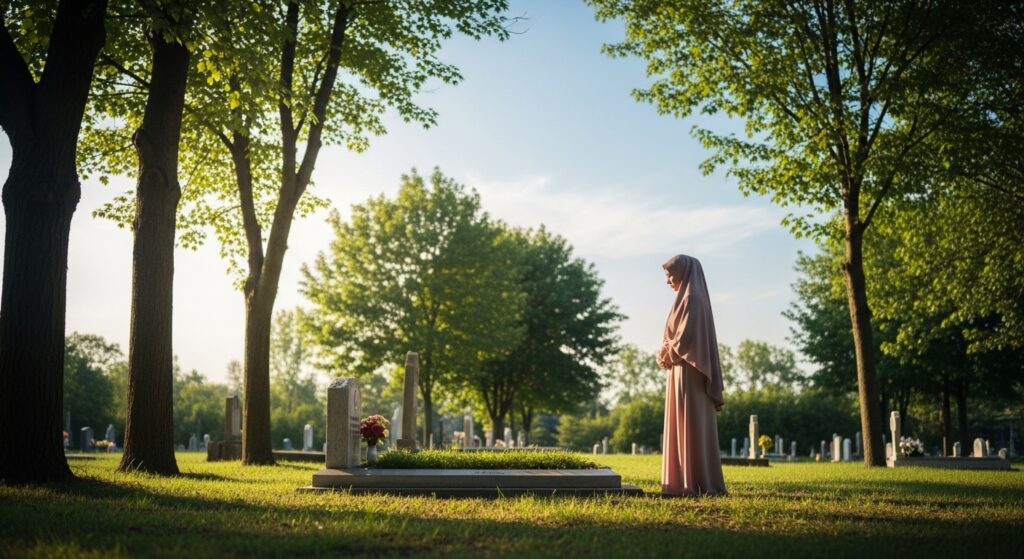
A major concern for many Muslims is whether Islam permits women to visit graves. The answer to this is yes, though the details are somewhat disputed by Islamic scholars. Islam does not provide a single judgment that can be used in all circumstances.
On the contrary, the Quran and hadith were examined by scholars, and they made various conclusions. Certain scholars advise women not to go to graves due to the sensitivity in their feelings and the chances of acting in an un-Islamic manner, like crying loudly.
According to other scholars, women can go to the graves provided they observe the Islamic etiquette and are modest. They state that it is not that Islam does not want to remember death, but to safeguard dignity and faith. There is one pointon which the scholars seem to agree.
Islam does not permit women to go to graves in a manner that involves wailing, disrespect,t or any form of acts against Islamic teachings. Many scholars believe that it is acceptable when women visit graves with patience, modesty, and with a good purpose.
This confusion can be avoided when Muslim women understand this difference of opinion. Islam knows various conditions and motives. Knowing the proofs of such decisions enables women to practice their religion affirmatively and to the full extent.
Academic view on Women visiting graves.
The Islamic scholars studied hadith and the Quran, and then they came up with their judgment regarding women visiting graves. They focus on willpower, action, and adherence to the Islamic frontiers.
Disliked but Not Forbidden
Other academics indicate that women are not supposed to visit frequently. They refer to it as disliked rather than haram. Frequent visits can be done, provided that the women manage their emotions and act in a modest way.
Permissible under Conditions.
Other researchers permit women to visit graves provided they adhere to the Islamic culture. They need to dress in modest ways, not cry loudly, and should concentrate on the dua. Intention matters most.
Infrequent vs frequent Visits.
Numerous researchers differentiate between uncommon and frequent visits. It is not forbidden to visit once or twice every week and have some prayers and contemplation. Emotion-disturbing visits should be discouraged. This demonstrates that Islam does not forbid women from attending graves and respecting the dignity and proper conduct.
Read also Dua for Deceased
Under Islam, there are conditions for women visiting graves.
In Islam, women can visit graves, although there are strict conditions that they have to adhere to remain within the Islamic guidelines.
Wear Modest Clothing
Women are expected to wear a good Hijab and other decent women’s attire. Modesty in dressing demonstrates a respect for both the dead and the Islamic religion.
Control Emotions
Women are not supposed to be crying like brats, crying and lamenting. Islam teaches that one should be patient and easy in the grave.
Maintain Proper Intention
The tour is aimed at commemorating death, praying over the dead, and considering the Hereafter. It is not possible to visit and be superstitious or un-Islamic.
Avoid Mixing or Fitnah
Women are not supposed to be in environments that can make them interact with males inappropriately. It is better to visit with family or in safe and controlled conditions.
Follow Islamic Etiquette
And stand up, pray, and say true duas. Do not engage in rituals that are not allowed by Islam. Always respect the grave and the surroundings.
These conditions are followed to make sure that women can visit graves in a safe, respectful, and manner that would please Allah.
Read also How To Perform Salatul Janazah
About hadith Can Women Visit Graves in Islam?
The Prophet ﷺ suggested; Do not make your homes graves and do not visit graves excessively.
Sahih Muslim, Ibn Sina, Book 11, Hadith 2219.
As per the scholarly explanations, this threat applies to repetitive visits, which lead to loud crying or non-Islamic behavior.
An invitation to Pay Graves.
The Prophet ﷺ told us to pay condolences to the graves, which remind you of the Hereafter. The 11,222 nd Hadith in Sahih Muslim.
FAQs: Can Women Visit Graves in Islam?
No. Islam does not completely forbid women from visiting graves. Women can visit if they follow Islamic manners, maintain modesty, and control their emotions.
Yes. Women are encouraged to pray for their parents and loved ones. Visiting graves for dua and reflection is allowed.
Islam allows it, but scholars recommend visiting with a family member or in safe, controlled situations to avoid fitnah.
Women should recite authentic duas, ask Allah for mercy for the deceased, and reflect on their own life and the Hereafter.
Yes. Women should avoid praying at graves during menstruation, but they can still visit respectfully and make dua in their hearts.
Conclusion
In conclusion, women can visit graves in Islam when they follow proper guidance and behave respectfully. First, they should wear modest clothing and control their emotions. Next, they should focus on making dua for the deceased and reflecting on the Hereafter.
Moreover, knowing the hadith and scholars’ opinions helps women understand the purpose of visiting graves. Islam values sincere intention, patience, and respect over gender restrictions. Finally, visiting graves allows women to remember death, pray for their loved ones, and strengthen their connection with Allah.
By following these simple steps, women can make grave visits meaningful, peaceful, and spiritually rewarding.
“If you want to learn the Quran with proper Tajweed, click the link below and start using our services.”https://onlinequrankidsschool.com/courses/