Venezuela crisis Islamic perspective: Learn how Islam guides Muslims to protect civilians, uphold justice, avoid rumors, and respond with dua and charity.
Introduction: How Islam Views Political Turmoil
The Venezuela crisis Islamic perspective shows that political turmoil affects ordinary people the most and Islam teaches a balanced, responsible response.
Families struggle to access food, safety, healthcare and basic stability. Daily life becomes uncertain and anxiety spreads quickly. In such moments, emotions run high and people often feel pressured to choose sides or react without thinking deeply.
However, Islam does not push believers toward chaos, violence or blind loyalty to any group. At the same time, Islam does not ignore injustice or remain silent in the face of oppression. Instead, Islam offers a balanced and principled path rooted in justice, compassion, wisdom, and responsibility.
Islam recognizes that injustice always leads to harm both in society and in the hearts of people. Yet, Islam also warns that reckless reactions, emotional speech and unverified actions can worsen suffering and increase instability.
That is why the Islamic approach focuses first on reducing harm, protecting innocent civilians, and preserving human dignity.
Read also Zulm in Iran
Stability vs Justice: The Islamic Balance
During political turmoil, many people ask an important question: Should stability be protected at all costs, or should injustice be challenged even if it causes unrest?
Islam answers this question with wisdom and balance.
Islam values stability because social order protects lives, families, and communities. When stability breaks down innocent people suffer the most especially the poor the elderly and children. For this reason, Islam does not encourage chaos, violence or actions that lead to widespread harm.
At the same time, Islam never supports stability that is built on oppression or injustice. Allah clearly commands justice and fairness in all situations. Remaining silent while people are oppressed is not considered a virtue in Islam. Instead, believers are encouraged to stand for truth but with wisdom and responsibility.
The Quran teaches that justice should be pursued in a way that prevents greater harm. This means Islam supports:
- Peaceful reform instead of violent rebellion
- Moral accountability instead of emotional reactions
- Patience and wisdom instead of anger and hatred
In difficult times, Islam reminds believers to think beyond emotions and consider the long term impact of their actions. The goal is not to win arguments or prove a point but to protect lives, reduce suffering, and restore fairness.
Leadership as Amanah and Accountability
In Islam, leadership is not a position of honor or power it is a trust (amanah) given by Allah. Anyone who holds authority whether over a country, a community or even a small group, carries a serious responsibility. Islam teaches that leaders must serve people, not control them.
The Prophet Muhammad ﷺ clearly explained this responsibility. He taught that every leader is accountable for those under their care. This means leaders must protect lives, ensure fairness, and prevent harm. When leaders fail to do so, they answer not only to people but to Allah.
Islam does not teach blind obedience to leadership. Instead, Islam teaches responsible obedience obedience that exists only when leadership does not command injustice or oppression. If leaders act unjustly, Islam allows people to speak the truth without hatred, insults, or violence.
At the same time, Islam warns against disrespectful speech, rebellion that causes bloodshed, and actions that destroy society. The goal is correction not revenge. Muslims are encouraged to advise sincerely, pray for guidance and support reform through lawful and peaceful means.
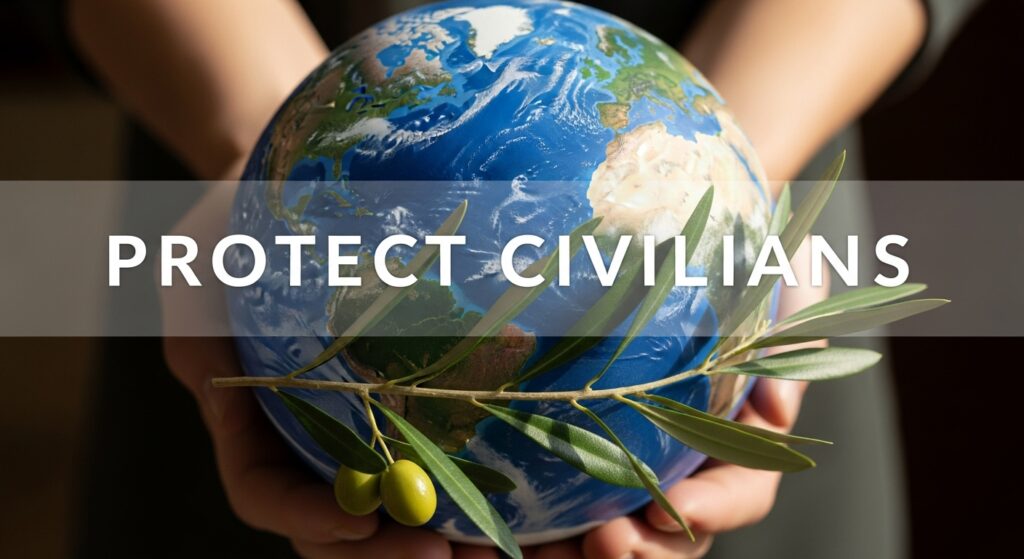
Protecting Civilians: An Islamic Priority
During political crises, ordinary people suffer the most. Families lose access to food, children miss school and patients struggle to receive medical care. Islam places strong importance on protecting these innocent civilians and considers their safety a top priority.
Islam clearly forbids harming people who are not involved in conflict. The Prophet Muhammad ﷺ repeatedly instructed his companions not to harm women, children, the elderly, or peaceful civilians even during times of war. This shows that Islam values human life and dignity above political or military goals.
Because of this, Islam strongly condemns actions that place civilians in danger. Any form of violence, fear, or collective punishment that harms innocent people goes against Islamic teachings. Islam does not justify suffering in the name of power, control or political gain.
At the same time, Islam encourages society and leadership to ensure access to basic needs. Food, safety, healthcare and dignity are not favors they are rights in Islam. When these rights are ignored, injustice spreads and trust breaks down.
Read also Day of Judgement in Islam
Verification: Avoiding Propaganda and Rumors
During political crises information spreads quickly but not all of it is true. Social media, forwarded messages, and emotional videos often mix facts with exaggeration or false claims. Islam strongly warns against sharing information without checking it first.
Islam teaches the principle of verification (tabayyun). Allah commands believers to confirm news before accepting or spreading it especially when the information can cause harm. This rule protects people from confusion fear and injustice.
When people share rumors or propaganda, they may unknowingly increase panic, hatred and division. Islam considers this behaviour dangerous because words can hurt just as much as actions. A single false message can damage trust, provoke anger or even put lives at risk.
Therefore, Islam calls Muslims to pause before reacting. Instead of forwarding emotional content believers should ask simple questions:
- Is this information confirmed?
- Does it come from a reliable source?
- Will sharing it reduce harm or increase fear?
If the answer is unclear Islam encourages silence. Staying quiet is sometimes a form of wisdom and worship.
Halal Support: Dua, Sadaqah, and Community Help
When political crises cause suffering many people feel helpless. They watch events from afar and wonder what they can realistically do. Islam answers this feeling by offering halal, meaningful actions that truly make a difference.
Dua: Turning to Allah First
Islam teaches believers to begin with dua. Dua is not a weak response it is a powerful act of worship. When Muslims raise their hands to Allah they ask for protection, relief, justice and peace for those who suffer.
Dua also softens the heart. It builds patience removes anger and reminds believers that Allah controls outcomes, even when situations feel hopeless. Islam encourages consistent dua not only during headlines but every day.
Sadaqah: Helping Through Charity
Next, Islam strongly encourages sadaqah (charity) during hardship. Charity provides real relief to struggling families, especially civilians who lack food, medicine, or shelter.
Islam does not require large donations. Even small amounts matter when given sincerely. The Prophet ﷺ taught that charity protects people from harm and brings blessings to both the giver and the receiver.
By supporting trusted and transparent causes, Muslims help reduce suffering in practical ways while fulfilling a core Islamic duty.
Community Help and Awareness
Islam also encourages believers to help through education and community support. Sharing accurate information, raising ethical awareness and encouraging calm discussion all count as positive contributions.
Believers should guide others toward patience verified knowledge and mercy rather than fear, hatred or panic. This approach strengthens the community and reflects Islamic character.
Small Actions Have Great Value
Islam reminds us that consistency matters more than size. Praying regularly, donating what you can and speaking responsibly all carry weight in the sight of Allah.
By choosing halal actions dua, charity and ethical support Muslims remain active, hopeful, and faithful, even during global crises.
Ethical Speech: Speak Without Hatred and Share Responsibly
During political crises words spread faster than actions. A single post, comment or message can influence thousands of people. Islam places great responsibility on speech and teaches believers to use words carefully especially during times of tension.
Islam clearly forbids hateful speech. Anger, frustration, or grief never justify insults, mockery or dehumanizing language. The Quran teaches Muslims to speak with dignity and fairness, even when emotions run high. Hatred only deepens division and increases suffering.
Islam encourages responsible sharing. Not every true piece of information needs to be shared publicly. If sharing a message increases fear, anger, or confusion, Islam advises restraint. Silence can be wiser than speech.
Believers should always ask themselves:
- Does this statement bring clarity or chaos?
- Does it protect innocent people or put them at risk?
- Does it reflect Islamic character?
Islam also reminds Muslims that Allah records every word. This awareness helps believers pause before speaking or posting online. Ethical speech becomes a form of worship when it protects peace and dignity.
Furthermore, Islam encourages calm and respectful dialogue. Disagreements should focus on ideas and actions not on attacking people or groups. Justice loses its meaning when it is expressed through cruelty or arrogance.
Hadith about Venezuela Crisis
The Prophet Muhammad ﷺ said:
“Each of you is a shepherd, and each of you is responsible for his flock.”
(Sahih al-Bukhari, Book 89, Hadith 252)Explanation:
This hadith reminds us that everyone in a position of responsibility leaders or ordinary people must protect and care for those under their care. It emphasizes accountability, justice, and the protection of innocent people which perfectly aligns with Islamic guidance during political crises.
FAQs about Venezuela Crisis
Islam values stability, but it never supports oppression. Islam teaches Muslims to seek justice in wise and peaceful ways that protect innocent lives and reduce harm.
Muslims should speak calmly, verify information, avoid hatred and focus on protecting civilians rather than spreading anger or rumors.
Yes, but only after verification. If sharing news causes fear, confusion, or harm, Islam encourages restraint and silence.
The best response includes sincere dua, regular charity, ethical speech, and consistent efforts to help through lawful and peaceful means.
Yes. Islam values consistent small actions, such as regular dua, modest charity, and responsible words, because Allah rewards sincerity over size.
Closing Dua for Venezuela Crisis
Arabic:
اللَّهُمَّ احْفَظِ الأَبْرِيَاءَ، وَارْفَعِ الظُّلْمَ، وَأَصْلِحِ الأَحْوَالَ، وَانْشُرِ السَّلَامَ وَالرَّحْمَةَ بَيْنَ عِبَادِكَ، وَثَبِّتْنَا عَلَى الْحَقِّ وَأَلْهِمْنَا أَنْ نَكُونَ عَادِلِينَ وَرَحِمَاءَ
Transliteration:
Allahumma ihfazhil-abriyaa, warfa’adh-dhulma, wa aslihil-ahwaal, wanshuris-salaama war-rahmah bayna ‘ibadika, wathabbitnaa ‘alal-haqqi wa alhimnaa an nakoon ‘aadileen wa raheemaa’
English Meaning:
O Allah, protect the innocent, remove oppression, reform conditions, and spread peace and mercy among Your servants. Keep us firm on truth and inspire us to be just and compassionate.
Conclusion about Venezuela Crisis
In times of political turmoil, like the crisis in Venezuela, Islam provides clear guidance for how believers should respond. Islam teaches Muslims to balance justice and stability, protect innocent civilians and avoid actions that spread harm or fear.
Words and deeds both carry weight, so speaking ethically, verifying information and avoiding rumors are as important as helping through dua, charity, and community support.
Islam reminds us that leadership is a trust (amanah), and every leader is accountable to Allah for their actions. At the same time, ordinary believers also carry responsibility: to act wisely, reduce harm and support the oppressed in lawful and ethical ways.
Even small consistent actions like praying for peace, giving modest charity or sharing truthful knowledge make a real difference in the world.
By following this Islamic approach Muslims can respond to crises with calm, compassion, and wisdom. They can protect civilians, uphold justice and maintain faith without falling into chaos or hatred. Ultimately, Islam guides us to be part of the solution helping those in need, spreading peace and trusting Allah’s guidance in every situation.
Want a deeper Islamic understanding?
Start learning the Quran with meaning join our Translation & Tafseer classes with a free trial today so click on link .