Discover Islam’s stance on zulm in Iran and the Muslim response through patience, truth, unity, dua, and charity.
Introduction zulm in Iran
During difficult times such as the situation in Iran, many Muslims feel sadness, anger and confusion. This article explains what zulm in Iran truly means according to Islam, why it is a major sin and how Muslims should respond in a way that pleases Allah.
Islam has always taken a clear and firm stand against oppression. The Arabic word zulm does not refer only to extreme violence or open tyranny. It includes every form of injustice, whether large or small public or hidden.
Taking someone’s rights, spreading lies, abusing power or remaining unfair in judgment are all forms of zulm in Islam.
When people suffer under oppression Islam does not ask Muslims to remain silent, nor does it encourage reckless or emotional reactions.
Instead, Islam teaches a balanced and wise response rooted in patience (sabr), truthfulness, unity, and meaningful action that brings benefit rather than harm.
In times of crisis, such as the situation in Iran, Muslims often experience anger, grief and confusion. It becomes easy to react emotionally or follow online pressure.
This article explains what zulm truly means in Islam why it is considered a major sin and how Muslims are guided to respond in a way that seeks Allah’s pleasure, protects truth and supports justice without creating further injustice.
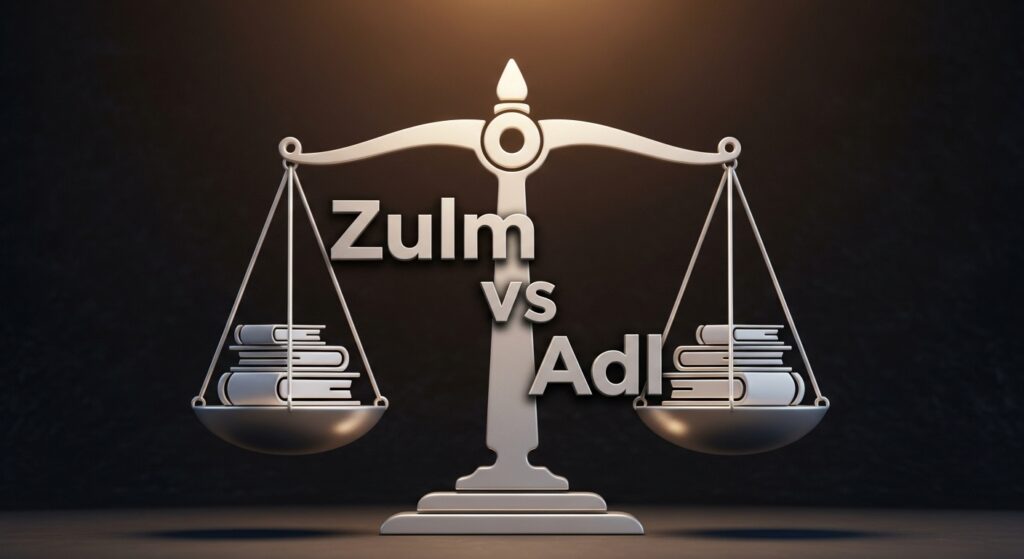
Meaning of Zulm in Islam
In Islam zulm means placing something where it does not belong. In simple words it is any form of injustice or unfairness. Zulm can be committed through actions, words or even decisions that deny people their rightful due.
Zulm is not limited to physical violence or oppression by force. It also includes:
- Taking or denying someone’s rights
- Treating people unfairly because of power, status, or beliefs
- Lying, false accusations, or slander
- Exploiting the weak, poor, or vulnerable
- Misusing authority for personal benefit
Islam teaches that zulm can be done against Allah, against other people and even against one’s own self. Because of this, zulm affects both individual character and the health of society as a whole.
Allah repeatedly warns in the Quran that He does not love the oppressors and that injustice, even if it appears strong for a time, never succeeds in the end.
“Help your brother, whether he is an oppressor or he is oppressed.”
When asked how to help an oppressor, he ﷺ replied:
“By preventing him from oppressing others; that is your help for him.”Reference: Jami’ at‑Tirmidhi, 2255
Why Zulm Is Dangerous Spiritually and Socially
Zulm does more than harm others it damages the soul and the community.
Spiritually zulm hardens the heart and weakens a person’s connection with Allah. The Prophet ﷺ reminded us that the prayer of an oppressed person reaches Allah without any barrier. This means that injustice carries serious consequences and those who oppress others risk both Allah’s displeasure and punishment.
Socially, zulm spreads fear, anger, and mistrust. It divides families, neighbors, and communities. When oppression becomes common, people stop believing in fairness, and hatred can take root. Islam teaches justice (adl) to protect people, build strong relationships, and create safe, peaceful societies.
By avoiding zulm and standing for justice, Muslims protect their faith, their hearts, and the communities around them. Acting justly brings peace, trust, and blessing to both individuals and society.
Sabr vs Silence: A Balanced Islamic Approach
Many people confuse sabr (patience) with staying silent. In Islam, they are not the same.
Sabr means staying strong, controlling your emotions, and responding wisely not ignoring injustice. It encourages Muslims to act with thoughtfulness and self control rather than anger or recklessness.
Islam allows speaking out against oppression, but it emphasizes doing so with honesty, fairness, and wisdom. Muslims should raise awareness, support the oppressed, and work for justice without creating more harm or division.
Remaining completely silent while injustice happens is not always correct, but reacting impulsively or with hate can become zulm itself. The key is to balance patience with action, always guided by Allah’s commands and the principles of truth and justice.
Practicing sabr strengthens the heart and brings Allah’s help. It allows Muslims to respond in a way that benefits the oppressed and protects society from chaos.
Truthfulness and Tabayyun: Speaking with Care
Islam teaches Muslims to always verify information before speaking or acting. This principle is called tabayyun. It helps prevent misunderstandings, false accusations and harm to others.
Before sharing anything or making claims, Muslims should:
- Make sure the information is true and reliable
- Avoid exaggeration or spreading rumors
- Speak with honesty and fairness
- Never say anything that could hurt someone or create conflict
Using tabayyun protects both the speaker and the community. Islam emphasizes that our words have power and speaking without knowledge can become a form of zulm.
Halal Actions: Dua, Charity, Helping Families, Educating Others
Islam encourages Muslims to respond to oppression not with anger or hate, but with real, beneficial actions. These actions bring help to the oppressed and earn Allah’s pleasure.
1. Dua (Supplication)
Making sincere dua is powerful. Muslims should pray for:
- The oppressed to find relief and protection
- Justice to prevail
- Guidance for themselves to act wisely and fairly
Dua is not passive it is an active way to seek Allah’s help and support the oppressed.
2. Charity (Sadaqah)
Giving charity helps those in need and removes hardship. Muslims can:
- Support families affected by oppression
- Provide food, education, or medical aid
- Give even small amounts with sincere intention
Sadaqah strengthens communities and spreads hope.
3. Helping Families and Communities
Muslims can take practical steps to assist those in difficulty:
- Volunteer in local initiatives
- Offer guidance, education, or mentorship
- Support community programs that help the vulnerable
Even small efforts make a difference and reflect the true spirit of Islam.
4. Educating Others
Spreading authentic Islamic knowledge is a form of service. Muslims can:
- Teach others about justice, rights and mercy
- Correct misunderstandings calmly
- Encourage actions that protect others from harm
Education prevents oppression and builds stronger, caring communities.
Read also Detentions & Justice
Closing Lessons + Short Dua for zulm in Iran
Islam teaches that zulm (oppression) is a major sin but it also guides Muslims on the proper way to respond. Instead of reacting with anger, hatred, or spreading false information, Muslims are encouraged to:
- Practice sabr (patience) while supporting the oppressed
- Speak and act with truthfulness and wisdom
- Maintain unity, avoiding division or sectarian conflict
- Take real, positive actions like dua, charity and helping communities
Following these principles protects your faith, strengthens your heart, and helps society. Even small acts of justice bring peace, hope and blessings.
Short Dua for Guidance and Justice
Arabic:
اللَّهُمَّ نَصْرَ الْمَظْلُومِينَ وَاكْفِ الْمُظْلِمِينَ، وَاهْدِ قُلُوبَنَا إِلَى الْعَدْلِ، وَاجْعَلْنَا مِنَ الَّذِينَ يَقُومُونَ بِالْحَقِّ بِحِكْمَةٍ
English Translation:
O Allah, help the oppressed, restrain the oppressors, guide our hearts to justice, and make us among those who stand for truth with wisdom. Ameen.
What the Hadith Say About Zulm (Oppression)
Importantly, the teachings of the Prophet ﷺ support the Quran’s stance against oppression and guide Muslims on how to respond correctly.
Prophet ﷺ said:
“Help your brother, whether he is an oppressor or he is oppressed.”
When asked how to help an oppressor, he ﷺ replied:
“By preventing him from oppressing others; that is your help for him.”Reference: Jami’ at‑Tirmidhi, 2255
FAQs about zulm in Iran
Zulm in Islam means any form of injustice or oppression, whether against Allah, other people, or oneself. It includes taking someone’s rights, lying, abusing power, or harming others unfairly.
Islam teaches that zulm harms both the soul and society. Oppressing others invites Allah’s displeasure, damages communities, and makes the supplication of the oppressed extremely powerful against the oppressor.
Yes, Islam allows speaking against oppression. However, Muslims must act with truthfulness, wisdom, and fairness, avoiding lies, exaggeration, or hate speech.
Muslims should practice tabayyun (verification):
Check if the information is reliable
Avoid rumors or emotional exaggeration
Speak only what is confirmed and true
This prevents harm and ensures justice.
Islam encourages sabr (patience), dua (supplication), charity, helping families, educating others, and promoting unity. These actions support the oppressed and strengthen society without committing injustice in return.
Conclusion: Lessons from Islam on Responding to zulm in Iran
Islam clearly teaches that zulm (oppression) is a major sin, but it also provides a clear roadmap for how Muslims should respond. Rather than reacting with anger or spreading misinformation, we are guided to act with patience, truthfulness, unity and meaningful deeds.
Moreover, Islam reminds us that our words and actions carry weight. By speaking truthfully, verifying information, supporting the oppressed, giving charity and educating others, Muslims actively promote justice while avoiding harm.
Furthermore, responding to oppression is not about emotion or social pressure. Instead, it requires wisdom, fairness, and intentional action. Consequently, following these principles helps Muslims protect their faith, strengthen communities and create a positive impact for those who are suffering.
Finally, even small, consistent actions like helping someone in need or performing a kind deed can make a lasting difference. Islam teaches that justice, mercy, and patience go hand in hand, and through them, Muslims can respond to oppression in the most meaningful and rewarding way.
Want Quran based clarity in hard times?
Learn with us in Quran Translation & Tafseer and understand Islam beyond headlines start your free trial today.