Islamic principles of justice and حقوق العباد meaning, how oppression harms society, and halal ways to help through dua and charity.
Introduction
Discussions about arrests and detentions can often cause worry and confusion. Islam provides clear moral guidance for such situations. It teaches Muslims to stay calm, think carefully, and act with Detentions & Justice, while always respecting human dignity and the rights of others.
This approach helps us respond in a balanced way supporting fairness, preventing harm and protecting those who are most vulnerable. By following these principles we can promote peace and justice in our communities.
Islam does not encourage emotional reactions baseless accusations or rumor spreading. Instead, it centers everything on justice (adl), human dignity and the protection of people’s rights (حقوق العباد). It also strongly warns against zulm (oppression) in every form.
This article explains how Islam views justice and human rights why oppression is a major sin and how Muslims should respond wisely and responsibly through dua, charity and ethical behavior without spreading fitnah or harm. The Prophet ﷺ said: “Whoever believes in Allah and the Last Day should speak good or remain silent.”
(Sahih Bukhari & Muslim)
Human Dignity and حقوق العباد in Islam
Islam gives every human being dignity. This dignity does not depend on nationality, status or background. Allah honored all human beings and gave them rights that must be protected.
One of the most important concepts in Islam is حقوق العباد (Huqooq-ul-Ibad) which means the rights of people. These rights include:
- The right to life and safety
- The right to dignity and respect
- The right to fairness and justice
- The right to protection from harm
Islam takes these rights very seriously. While Allah may forgive sins related to His own rights, violations of people’s rights require accountability and justice.
حقوق العباد Explained Simply
In simple words حقوق العباد means:
Never harm others and never ignore harm done to them.
If a person is wronged Islam does not treat it lightly. Instead, it calls the community to care, pray and act responsibly.
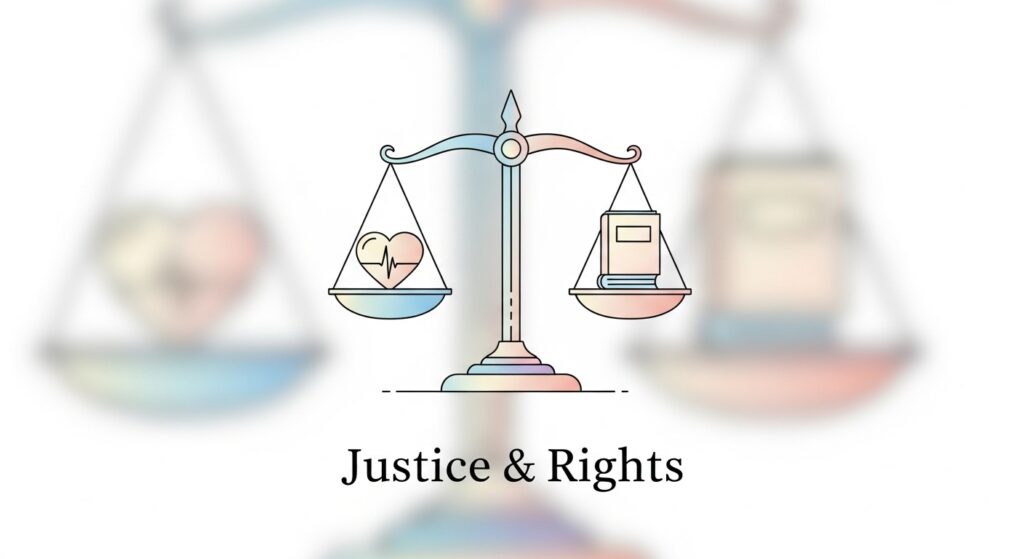
Adl (Justice) as a Core Islamic Command
Justice is not optional in Islam. It is a core command from Allah. Muslims must support justice even when it is uncomfortable or emotionally difficult.
Allah commands justice clearly in the Quran:
“Indeed, Allah commands justice, excellence, and giving help to relatives, and He forbids immorality, wrongdoing, and oppression.”
(Surah An-Nahl 16:90) This verse shows that justice stands at the heart of Islamic ethics. Without justice, societies collapse and trust disappears.
Islam teaches that justice must be applied fairly not selectively. It should never depend on personal feelings, group loyalty or anger.
Justice Protects Society
Justice does not only protect individuals. It also protects society as a whole. When justice disappears:
- Fear spreads
- Trust breaks
- Families suffer
- Communities divide
That is why Islam strongly warns against injustice and oppression. Justice brings peace, stability, and mercy.
Why Oppression (Zulm) Is a Major Sin
Zulm means placing something where it does not belong. In real life it means wrongfully harming, abusing or denying rights.
Islam considers zulm one of the greatest sins because it causes deep harm both spiritually and socially.
The Prophet Muhammad ﷺ reported that Allah said:
“O My servants, I have forbidden oppression for Myself and made it forbidden among you so do not oppress one another.”
(Sahih Muslim) This hadith clearly shows that zulm is haram in all forms. No situation justifies injustice.
Spiritual and Social Harm of Zulm
Zulm does not only harm the victim. It harms:
- Families who suffer silently
- Communities that lose trust
- Societies that become unstable
- Hearts that grow hard
Islam warns that oppression brings darkness on the Day of Judgment. Therefore, Muslims must fear zulm and avoid supporting it directly or indirectly.
Speaking Responsibly: No Baseless Claims or Slander
During sensitive situations words can heal or destroy. Islam teaches Muslims to control their speech, especially during crises involving arrests or detentions.
Islam strictly forbids:
- False accusations
- Slander
- Name-calling
- Sharing rumors
- Speaking without knowledge
Allah commands believers to verify information:
“O you who believe! If a sinner comes to you with news, verify it, lest you harm people out of ignorance and then regret it.”
(Surah Al-Hujurat 49:6)
This verse forms the foundation of responsible speech in Islam.
What Not to Do
Muslims should avoid:
- Forwarded messages without sources
- Emotional posts filled with anger
- Accusations without proof
- Public shaming and insults
- Panic-posting
Even good intentions do not make harmful speech halal.
What to Do Instead: Speak with Truth and Compassion
Islam encourages Muslims to:
- Speak only what they know is true
- Remain silent when unsure
- Use respectful language
- Choose compassion over anger
The Prophet ﷺ said:
“Whoever believes in Allah and the Last Day should speak good or remain silent.”
(Sahih Bukhari & Muslim)
This hadith offers a clear rule for social media and daily conversations.
Halal Support Actions: Dua, Charity, Community Help
Islam never leaves Muslims helpless. It provides clear halal ways to help those affected by hardship.
Making Dua for the Vulnerable
Dua is a powerful form of support. The Prophet ﷺ warned:
“Beware of the supplication of the oppressed, for there is no barrier between it and Allah.”
(Sahih Bukhari)
Make sincere dua for:
- Protection and safety
- Justice and fairness
- Patience for families
- Ease after hardship
Consistent dua brings spiritual strength and hope.
Supporting Families Through Charity (Sadaqah)
Families affected by detentions often face emotional and financial pressure. Islam encourages sadaqah as a way to ease suffering.
Support:
- Verified charitable causes
- Community assistance programs
- Families in need through trusted channels
Even small charity, given sincerely, carries great reward.
Community Support with Wisdom
Communities play a vital role. Offer emotional support, practical help, and prayers. Encourage unity instead of division.
Islam values quiet goodness over loud reactions.
What to Do and What to Avoid (Quick Guide)
Avoid
Rumors
Accusations
Name calling
Online arguments
Emotional posting
Do
Make consistent dua
Give sadaqah wisely
Verify information
Speak gently
Help locally
Frequently Asked Questions (FAQs)
It means the rights of people, which Islam strongly protects and does not take lightly.
Yes. Sharing unverified information can cause harm and is sinful.
Through sincere dua, verified charity, local community support, and respectful speech.
Closing Reflection
In times of hardship, Islam provides clear and balanced guidance. First of all, it reminds us that justice, dignity and compassion must shape every response. Muslims should stand with the vulnerable yet at the same time avoid words or actions that cause further harm.
Moreover, Islam teaches us to oppose zulm firmly but wisely. While injustice must never be ignored Muslims must also ensure that their own behavior remains fair, calm and ethical. Acting with anger or spreading unverified claims only weakens the message of justice.
Therefore, true Islamic strength does not appear in loud reactions or emotional arguments. Instead, it shows itself through wisdom, patience, sincere dua, and responsible action. When Muslims follow this path, they protect their faith, support the oppressed correctly and help build a more just and compassionate society.
Read also Justice in Islam
Detentions & Justice are closely linked in Islam. When detentions happen, justice must be the main priority. Islam teaches that detentions should only occur with clear evidence and fair treatment. In every situation, Muslims must remember that detentions & justice must protect human dignity and rights. Finally, we should always support detentions & justice through wise action, responsible speech, and sincere dua.
Want Deeper Islamic Understanding?
👉 Join our Quran Translation/Tafseer program and begin your free trial today.
Explore:
- Quran Translation / Tafseer
- Online Quran Classes
- Contact / Free Trial
- About Us