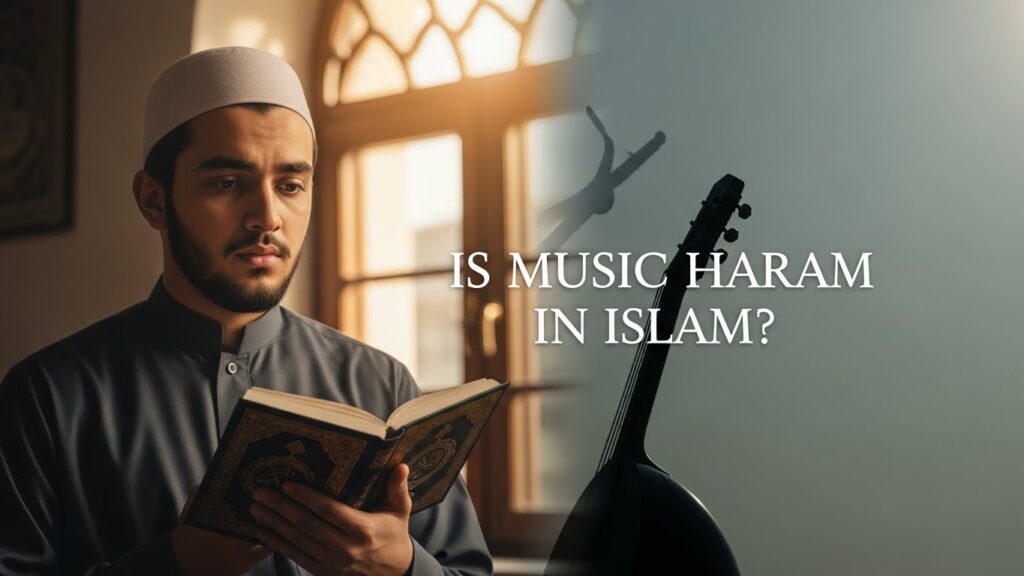
Is music haram in Islam? Learn what the Quran, Hadith, and Islamic scholars say about listening to music in a clear and simple way.
Introduction
Music is everywhere in our daily lives. We hear it on our phones, in cars, at weddings, and even in short videos on social media. Because music has become such a normal part of modern life, many Muslims often stop and think about its place in Islam.
As a result, a common and important question comes to mind: Is music haram or halal in Islam? Some people believe that all types of music are forbidden, while others feel that certain forms may be allowed. This difference of opinion can create confusion, especially for Muslims who sincerely want to live according to Islamic teachings.
Islam does not leave believers without guidance. The Quran, the Hadith of Prophet Muhammad ﷺ, and the explanations of respected Islamic scholars all provide direction on how Muslims should approach music and entertainment. Prophet Muhammad ﷺ said:
“There will be among my followers people who will consider unlawful adultery, silk, alcohol, and musical instruments.” (Sahih al-Bukhari, Book 74, Hadith 301) By understanding these sources, a person can make more informed and confident choices.
Read also Does Listening to Music Break Wudu?
What Does Islam Say About Music?
First of all, Islam teaches Muslims to live a balanced and mindful life. Everything a believer does should bring them closer to Allah or, at the very least, should not pull them away from His remembrance. Because of this principle, many Muslims naturally wonder how music fits into an Islamic lifestyle.
In general, Islam does not judge actions only by their appearance. Instead, it looks at intention, impact, and outcome. For this reason, scholars explain that the discussion about music is not just about sound or melody. Rather, it is about what the music contains and how it affects a person’s heart and behaviour.
Moreover, Islam clearly encourages purity in speech, actions, and thoughts. Therefore, anything that promotes immorality, distracts from prayer, or leads toward sinful behaviour raises serious concern. Based on this understanding, some scholars take a stricter view of music while others allow it under certain conditions.
At the same time, it is important to remember that Islam recognizes human emotions. Happiness, relaxation, and cultural expression all exist within Islamic teachings. Because of this, scholars have carefully studied Islamic sources to determine when music may be harmful and when it may be harmless.
Views of Islamic Scholars on Music
Islamic scholars have studied the Quran and Hadith carefully to guide Muslims about music. Their views help explain why some Muslims believe music is haram while others see it as allowed in certain situations.
Scholars Who Consider Music Haram
Some scholars believe that all music with instruments is haram. They explain that music can distract people from prayer, encourage bad habits, or lead to sinful behavior. According to them, avoiding music completely is the safest way to stay close to Allah.
Scholars Who Allow Music With Conditions
Other scholars say music can be allowed if it meets certain conditions. For example, the lyrics should not promote immorality, the music should not distract from religious duties, and it should not make a person forget Allah. Simple songs, cultural music, or Islamic nasheeds without instruments are often considered acceptable.
Is Singing Haram in Islam?
Singing in Islam is different from listening to music with instruments. Many scholars agree that singing without harmful content is generally allowed. For example, singing during weddings, celebrations, or happy occasions has been a part of Islamic culture for centuries.
Islamic nasheeds, which are songs that praise Allah or teach good values, are especially encouraged. They can inspire people to remember Allah, feel happiness, and strengthen faith.
However, singing becomes a problem if the words are inappropriate, encourage sinful behaviour, or distract a person from prayers and religious duties. In these cases, it is considered haram.
Musical Instruments in Islam
Musical instruments are an important part of the discussion about music in Islam. Scholars have different opinions about which instruments are allowed and which are not.
For example, some scholars say that instruments like the flute, strings, or drums can be haram if they are used in ways that distract from prayer or encourage sinful behaviour. On the other hand, certain instruments like the daff (a small drum) were allowed by the Prophet ﷺ for celebrations, weddings, and happy occasions.
The main point is that the intention and context matter most. If instruments are used for harmless enjoyment, cultural events, or religious songs, many scholars consider them acceptable. But if they are used in ways that lead to immoral behaviour or neglect of religious duties, they are considered forbidden.
When Does Music Become Haram?
Music becomes haram in Islam when it leads people away from Allah or encourages bad behavior. There are a few common situations where music is considered forbidden:
- Immoral or inappropriate lyrics – Songs that promote lying, cheating, violence, or bad habits are not allowed.
- Distraction from religious duties – Music that makes a person skip prayers or neglect their faith is harmful.
- Encouraging sinful behavior – If listening to music leads to actions that Islam forbids, it becomes haram.
When Can Music Be Considered Halal?
Music can be considered halal in Islam when it does not harm faith or encourage sinful behavior. There are several situations where listening to music is allowed:
- Positive and clean lyrics – Songs that teach good values, praise Allah, or spread happiness are acceptable.
- No neglect of religious duties – Music that does not make a person skip prayers or forget Islamic obligations is fine.
- Cultural and celebratory use – Music used in weddings, festivals, or other joyful events is often allowed, especially if it does not include sinful content.
- Islamic nasheeds – Singing or listening to nasheeds that praise Allah or teach Islamic morals is encouraged.
Is Listening to Music a Major Sin?
Listening to music is not automatically a major sin in Islam. Scholars explain that it depends on the type of music and its impact on a person’s faith and actions.
If music encourages sinful behaviour, distracts from prayers, or leads a person away from Allah, then it can be considered a serious sin. On the other hand, listening to music with clean lyrics, positive messages, or cultural value does not count as a major sin.
Quranic Verses Often Quoted About Music
Some Muslims wonder if the Quran directly forbids music. While the Quran does not clearly mention “music” by name, scholars refer to certain verses that warn against distractions and idle talk that pull people away from Allah.
For example, the Quran says that some people spend their time in vain talk and forget their duties to Allah. Scholars explain that these verses guide Muslims to avoid anything that harms faith or encourages sinful behaviour. In this way, music that leads a person away from prayer or promotes bad habits may fall under this guidance.
At the same time, many scholars emphasize context. These verses do not forbid all types of music. Instead, they teach Muslims to make careful choices, focus on their faith, and avoid actions that harm their spiritual life.
Hadith About Music in Islam
Hadith, the sayings and actions of Prophet Muhammad ﷺ, provide important guidance about music. Scholars use these narrations to explain what is allowed and what is not.
Hadith That Warn Against Music
Some Hadith caution against music and musical instruments when they lead people away from prayer or encourage sinful behaviour. For example:
Prophet Muhammad ﷺ said:
“There will be among my followers people who will consider unlawful adultery, silk, alcohol, and musical instruments.” (Sahih al-Bukhari, Book 74, Hadith 301)
Common Questions About Music in Islam
No, music is not completely haram. Scholars explain that music becomes haram only when it distracts you from prayer, encourages sin, or contains immoral content. Clean and positive music can be acceptable.
Yes, instrumental music or melodies without inappropriate words are usually allowed. Scholars say the impact on your heart and faith matters most.
Background music is not haram if it does not distract you from worship or encourage sinful behaviour. You should stay mindful of your faith while listening.
Yes, nasheeds that praise Allah or teach good values are halal. They inspire positivity, strengthen faith, and are often encouraged by scholars.
You should evaluate the music you listen to. Avoid songs with immoral content and focus on those that bring joy without harming your faith. Islam values intention and action, so choose wisely.
Conclusion: Is Music Haram in Islam? (H2)
Music in Islam is not simply haram or halal. Scholars guide Muslims to think carefully about their choices. Music becomes haram when it distracts you from prayer, encourages sinful behavior, or contains immoral content. On the other hand, music that brings joy, teaches good values, or inspires faith can be halal.
The Quran and Hadith provide clear guidance, and scholars explain the importance of intention and context. When you choose music wisely, you protect your faith and enjoy harmless entertainment. Islam encourages balance, so you can enjoy songs, cultural celebrations, or Islamic nasheeds while staying mindful of your religious duties.
“Choose music that uplifts your heart, strengthens your faith, and keeps you close to Allah.”
👉 Strengthen your faith with guided learning join our Online Quran Classes and book a free trial today.
Explore:
- Online Quran Classes
- Tajweed Course
- Quran for Beginners
- Free Trial / Contact Us