
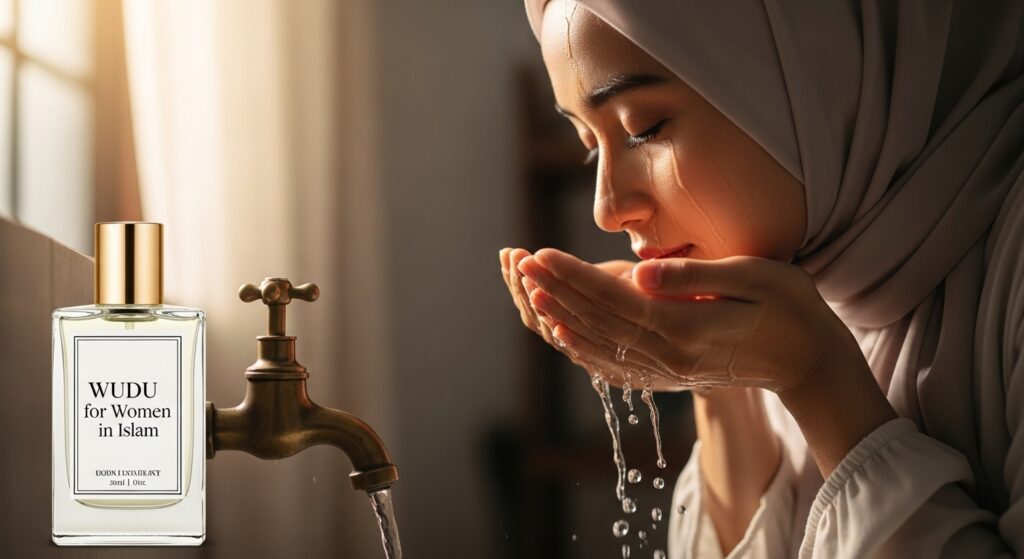
Wudu for women in Islam explained: step-by-step method, rules, and what breaks wudu with Quran and Hadith guidance.
Introduction
Wudu, also called ablution is a form of ritual purification in Islam. It is the act of washing specific parts of the body before offering prayers and other acts of worship. This practice is not only about physical cleanliness but also about preparing the heart and mind to stand before Allah in a state of purity.
In Islam, purification holds great importance because prayer is not valid without wudu. By performing ablution, Muslims renew their intention to worship and strengthen their spiritual connection. The Quran emphasizes that cleanliness is part of faith and wudu is one of the main ways to achieve that purity.
For women in Islam, wudu carries the same essential rules as it does for men, yet there are a few practical considerations that may apply in daily life.
Women may have to take into account situations such as menstruation, postnatal bleeding or the use of cosmetics like nail polish and makeup, which can affect the validity of wudu. Understanding these details helps women perform ablution correctly and confidently in every stage of life.

What Is Wudu in Islam?
Wudu in Islam means washing specific parts of the body before prayer. It is also known as ablution. Muslims perform it to remove minor impurities and prepare for worship.
The Quran mentions wudu as a requirement before standing in prayer. Allah commands believers to wash their faces, hands, arms, and feet and to wipe over the head. This shows that purification is a condition for prayer.
Wudu is not only physical cleaning. It is also a spiritual act. It reminds Muslims that purity of the heart and soul is as important as purity of the body.
For women in Islam, wudu is a way to stay mindful of Allah in daily life. It helps them stay connected to their faith and perform prayers in a state of purity.
Why Wudu Is Important for Women in Islam
Wudu is very important for women in Islam. It is the key to performing prayer correctly. Without wudu, prayer is not accepted.
For women, ablution is also a reminder of inner purity. Each step cleans the body and refreshes the mind. It prepares the heart to focus only on Allah.
Wudu brings spiritual peace. It helps women leave behind stress and distractions. It strengthens faith and builds a stronger connection with Allah.
In daily life, women often manage many responsibilities. Wudu gives them a short moment of calm and renewal. It is a way to balance both worldly duties and worship.
Step by Step Guide to Wudu for Women
Performing wudu is simple when you follow the steps in order. Each step should be done with intention and care.
Step 1: Make Intention (Niyyah)
Start with the intention in your heart. Say Bismillah before beginning.
Step 2: Wash the Hands
Wash both hands up to the wrists three times. Make sure water reaches between the fingers.
Step 3: Rinse the Mouth
Take water in your right hand and rinse the mouth three times. Spit the water out each time.
Step 4: Clean the Nose
Gently inhale water into the nose and blow it out three times.
Step 5: Wash the Face
Wash the face from forehead to chin and from ear to ear three times.
Step 6: Wash the Arms
Wash the right arm up to the elbow three times, then the left arm.
Step 7: Wipe the Head
Wet the hands and pass them over the head once.
Step 8: Clean the Ears
With the same wet hands, wipe the inside and outside of the ears once.
Step 9: Wash the Feet
Wash the right foot up to the ankle three times, then the left foot. Do not miss the area between the toes.
After completing these steps, say the Shahada. Your wudu is now complete, and you are ready to pray.
Benefits of Wudu in Daily Life for Women
Wudu offers many benefits for women beyond prayer. It refreshes the body, calms the mind and strengthens faith.
Spiritual Benefits
First of all, wudu increases closeness to Allah. Each step washes away sins and brings a sense of renewal. In addition, it prepares the heart to focus on prayer with sincerity.
Emotional and Psychological Benefits
Wudu also reduces stress. The act of washing with clean water gives peace and relaxation. Moreover, it helps women pause from daily duties and reconnect with their inner self.
Health Benefits
Wudu improves hygiene and prevents germs from spreading. Since women wash hands, face, and feet several times a day it keeps the body fresh and clean. As a result, it also protects overall health.
Social Benefits
Cleanliness has a positive effect on others. When women stay pure, they set a good example for family and community. Furthermore, it encourages children to follow the habit of purity in their own lives.
Through these benefits, wudu becomes more than a ritual. It turns into a daily source of strength, peace, and purity for women.
Conditions That Break Wudu for Women
Certain actions break wudu and require renewal before prayer. Knowing them helps women stay prepared for worship.
- Natural needs: Passing urine, stool, or gas breaks wudu.
- Deep sleep: Sleeping in a way that removes awareness breaks wudu.
- Bleeding: Menstruation and postnatal bleeding make wudu invalid.
- Body fluids: Heavy bleeding, vomiting, or discharge can break wudu.
- Loss of senses: Fainting or losing consciousness also breaks wudu.
When any of these happen, women should make wudu again before praying. Staying aware of these conditions helps maintain purity and readiness for worship.
Things That Do Not Break Wudu
Not everything breaks wudu. There are several actions that do not affect ablution. Knowing them helps women avoid unnecessary doubt.
- Touching children: Carrying or touching children does not break wudu.
- Touching yourself or others: Shaking hands or touching someone does not break wudu unless impurity is involved.
- Minor bleeding or small wounds: A little blood that does not flow out does not break wudu.
- Eating or drinking: Food and drink do not affect wudu.
- Light sleep: A short nap while sitting without losing awareness does not break wudu.
In this way, women can stay confident and not worry about small actions. Islam is easy, and wudu only breaks with the conditions proven in the Quran and Sunnah.
Mistakes Women Should Avoid During Wudu
While performing wudu, some mistakes are very common. Avoiding them makes ablution correct and complete.
- Skipping steps: Some women forget to wash certain parts, like between the fingers or toes. Every step must be done fully.
- Not covering the full area: Water must reach the elbows, ankles, and hairline. Leaving any part dry makes wudu invalid.
- Using too much water: Islam teaches moderation. Wasting water during wudu is against the Sunnah.
- Rushing: Performing wudu in a hurry may cause missed steps. It is better to stay calm and focused.
- Wearing barriers: Nail polish, heavy makeup, or creams that block water make wudu incomplete. Women should check before starting ablution.
By avoiding these mistakes, women can perform wudu in the way taught by the Prophet ﷺ. This ensures both physical purity and spiritual reward.
Quranic Ayah About Wudu
The Quran clearly mentions wudu in Surah Al-Maidah. Allah says:
يَا أَيُّهَا الَّذِينَ آمَنُوا إِذَا قُمْتُمْ إِلَى الصَّلَاةِ فَاغْسِلُوا وُجُوهَكُمْ وَأَيْدِيَكُمْ إِلَى الْمَرَافِقِ وَامْسَحُوا بِرُءُوسِكُمْ وَأَرْجُلَكُمْ إِلَى الْكَعْبَيْنِ
(Surah Al-Maidah 5:6)
Translation:
“O you who believe! When you rise to perform prayer, wash your faces and your hands up to the elbows. Wipe over your heads and wash your feet up to the ankles.”
This verse shows that wudu is a direct command from Allah. It reminds believers that purification is necessary before standing in prayer.
Hadith About Wudu for Women
The Prophet Muhammad ﷺ taught Muslims how to perform wudu. His sayings show the value of purification.
One Hadith in Sahih Muslim says:
“When a Muslim makes wudu and washes his face, every sin he looked at leaves with the water.”
Another Hadith in Sahih Bukhari mentions:
“No prayer is accepted without purification.”
These Hadiths remind women that wudu is more than cleaning. It removes sins and prepares the soul for prayer. Following the Sunnah helps women perform wudu in the correct way.
Common Questions About Wudu for Women
Women often face practical questions about wudu in daily life. Therefore, it is helpful to look at some common issues and their answers.
Nail polish forms a layer that blocks water. As a result, wudu is not valid if water cannot reach the nails. Women who want to use nail polish should remove it before ablution. Alternatively, they may use breathable nail polish if scholars in their school of thought allow it.
Makeup like powder or lipstick does not block water, so it does not affect wudu. However, heavy makeup or waterproof products may prevent water from reaching the skin. In that case, women should remove it before ablution.
Simply touching children does not break wudu. Yet, if it leads to any impurity such as urine or stool, then wudu needs to be renewed.
Pregnant women follow the same rules of wudu as other women. However, since they may face more discharge, they should renew wudu whenever needed before prayer.
No, simply touching your husband does not break wudu unless impurity is involved.
No, wudu is not required after every prayer if it is still valid. You only need to repeat wudu if it is broken.
No, food and drink do not break wudu. You only need to renew wudu when a condition that invalidates it occurs
By understanding these situations, women can perform wudu with confidence. Moreover, it helps them stay pure and ready for worship at all times.
Conclusion
Wudu for women in Islam is more than a daily routine. It is an act of worship that cleans both the body and the soul. Through ablution, women prepare themselves to pray with full focus and sincerity.
The Qur’an and Hadith remind us that no prayer is complete without wudu. It washes away minor sins, brings inner peace and builds a stronger bond with Allah.
For women, following the correct steps of wudu is a way to honor their faith and practice purity in daily life. By avoiding common mistakes and staying mindful, they can keep their worship pure and rewarding.
Every time a woman makes wudu, she renews not just her prayer but also her connection with her Creator.
Wudu for women in Islam is a beautiful act of purity that brings both spiritual peace and closeness to Allah.
A deeper connection with the Quran brings lasting peace.
Join our Tajweed Course and begin with a free trial.
👉 Learn with confidence through our Online Quran Classes.