
Discover the 99 Names of Allah with meanings. Learn their importance in Islam, spiritual benefits, and how reciting Asma ul Husna brings peace and faith.
Introduction
The 99 Names of Allah also known as Asma ul Husna, hold a very special place in Islam. Each of these beautiful names reflects one of Allah’s unique attributes and qualities, such as mercy, wisdom and power. By learning these names, Muslims gain a deeper understanding of who Allah is and how He relates to His creation.
Muslims believe that the 99 Names of Allah are more than just words. They carry deep meanings that inspire faith, love and trust in the Creator. Reciting them regularly helps believers remember Allah in their daily lives and strengthens their relationship with Him.
Many Muslims also make an effort to memorize all of the99 Names of Allah. This practice is seen as a source of blessings, spiritual growth, and inner peace. It also serves as a way to seek closeness to Allah and to call upon Him with the most beautiful names during prayer and supplication.
The importance of these names is highlighted in both the Quran and Hadith, where Muslims are encouraged to remember Allah through His names. This shows that learning and reciting the 99 Names of Allah is not just a spiritual practice but also a path toward building a stronger connection with faith.
What Are the 99 Names of Allah?
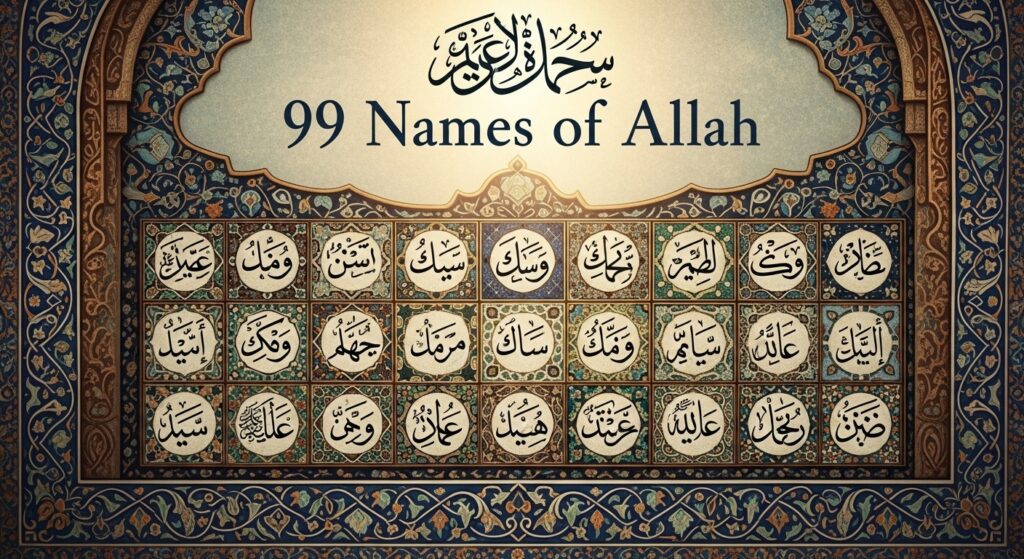
The 99 Names of Allah, known as Asma ul Husna, are the most beautiful names and attributes of Allah mentioned in the Quran and Hadith. Each name shows a unique quality of Allah, such as Ar-Rahman (The Most Merciful), Al-Hakeem (The All-Wise), or Al-Malik (The King). These names remind Muslims that Allah is perfect in every way and has complete control over the universe.
The Prophet Muhammad ﷺ encouraged Muslims to learn and recite these names. In one Hadith he said that whoever memorizes the 99 Names of Allah with sincerity will enter Paradise. This shows the great spiritual reward connected to knowing and practicing them.
By reflecting on these names, Muslims strengthen their understanding of Allah’s greatness and mercy. The 99 Names of Allah also guide believers in their daily lives, reminding them to rely on Allah in every situation. Whether in times of ease or hardship, calling upon Allah with His names brings comfort, hope, and peace.
Introduction to 99 Names of Allah
Muslims recite and memorize the 99 Names of Allah, known as Asma ul Husna, to strengthen their faith and build closeness to Allah. Each name reflects a unique attribute of Allah and inspires believers to remember His mercy, power, and wisdom.
Benefits of Reciting Asma ul Husna
Strengthens faith and spirituality
Brings peace and comfort to the heart
Remind us of Allah mercy and wisdom
99 Names of Allah with Meaning
Allah Mercy and Compassion 1_20
| No. | Arabic Name | Transliteration | English Meaning |
|---|---|---|---|
| 1 | ٱلرَّحْمَـانُ | Ar-Rahmān | The Most Merciful |
| 2 | ٱلرَّحِيمُ | Ar-Rahīm | The Most Compassionate |
| 3 | ٱلْمَلِكُ | Al-Malik | The King, The Sovereign |
| 4 | ٱلْقُدُّوسُ | Al-Quddūs | The Most Holy |
| 5 | ٱلسَّلَامُ | As-Salām | The Source of Peace |
| 6 | ٱلْمُؤْمِنُ | Al-Mu’min | The Giver of Faith |
| 7 | ٱلْمُهَيْمِنُ | Al-Muhaymin | The Protector |
| 8 | ٱلْعَزِيزُ | Al-‘Azīz | The Almighty, The Strong |
| 9 | ٱلْجَبَّارُ | Al-Jabbār | The Compeller |
| 10 | ٱلْمُتَكَبِّرُ | Al-Mutakabbir | The Supreme, The Majestic |
| 11 | ٱلْخَالِقُ | Al-Khāliq | The Creator |
| 12 | ٱلْبَارِئُ | Al-Bāri’ | The Evolver |
| 13 | ٱلْمُصَوِّرُ | Al-Musawwir | The Fashioner |
| 14 | ٱلْغَفَّارُ | Al-Ghaffār | The Forgiving |
| 15 | ٱلْقَهَّارُ | Al-Qahhār | The Subduer |
| 16 | ٱلْوَهَّابُ | Al-Wahhāb | The Bestower |
| 17 | ٱلرَّزَّاقُ | Ar-Razzāq | The Provider |
| 18 | ٱلْفَتَّاحُ | Al-Fattāh | The Opener |
| 19 | ٱلْعَلِيمُ | Al-‘Alīm | The All-Knowing |
| 20 | ٱلْقَابِضُ | Al-Qābid | The Withholder |
Allah Power And strength (21–40)
| No. | Arabic Name | Transliteration | English Meaning |
|---|---|---|---|
| 21 | ٱلْبَاسِطُ | Al-Bāsit | The Expander |
| 22 | ٱلْخَافِضُ | Al-Khāfid | The Abaser |
| 23 | ٱلرَّافِعُ | Ar-Rāfi‘ | The Exalter |
| 24 | ٱلْمُعِزُّ | Al-Mu‘izz | The Bestower of Honor |
| 25 | ٱلْمُذِلُّ | Al-Mudhill | The Humiliator |
| 26 | ٱلسَّمِيعُ | As-Samī‘ | The All-Hearing |
| 27 | ٱلْبَصِيرُ | Al-Basīr | The All-Seeing |
| 28 | ٱلْحَكَمُ | Al-Hakam | The Judge |
| 29 | ٱلْعَدْلُ | Al-‘Adl | The Just |
| 30 | ٱللَّطِيفُ | Al-Latīf | The Gentle, The Subtle |
| 31 | ٱلْخَبِيرُ | Al-Khabīr | The All-Aware |
| 32 | ٱلْحَلِيمُ | Al-Halīm | The Forbearing |
| 33 | ٱلْعَظِيمُ | Al-‘Azīm | The Magnificent |
| 34 | ٱلْغَفُورُ | Al-Ghafūr | The All-Forgiving |
| 35 | ٱلشَّكُورُ | Ash-Shakūr | The Most Appreciative |
| 36 | ٱلْعَلِيُّ | Al-‘Aliyy | The Most High |
| 37 | ٱلْكَبِيرُ | Al-Kabīr | The Most Great |
| 38 | ٱلْحَفِيظُ | Al-Hafīz | The Preserver |
| 39 | ٱلْمُقِيتُ | Al-Muqīt | The Nourisher |
| 40 | ٱلْحسِيبُ | Al-Hasīb | The Reckoner |
Name Of Allah (41–60)
| No. | Arabic Name | Transliteration | English Meaning |
|---|---|---|---|
| 41 | ٱلْجَلِيلُ | Al-Jalīl | The Majestic |
| 42 | ٱلْكَرِيمُ | Al-Karīm | The Generous |
| 43 | ٱلرَّقِيبُ | Ar-Raqīb | The Watchful |
| 44 | ٱلْمُجِيبُ | Al-Mujīb | The Responsive |
| 45 | ٱلْوَاسِعُ | Al-Wāsi‘ | The All-Encompassing |
| 46 | ٱلْحَكِيمُ | Al-Hakīm | The All-Wise |
| 47 | ٱلْوَدُودُ | Al-Wadūd | The Most Loving |
| 48 | ٱلْمَجِيدُ | Al-Majīd | The Most Glorious |
| 49 | ٱلْبَاعِثُ | Al-Bā‘ith | The Resurrector |
| 50 | ٱلشَّهِيدُ | Ash-Shahīd | The Witness |
| 51 | ٱلْحَقُّ | Al-Haqq | The Truth |
| 52 | ٱلْوَكِيلُ | Al-Wakīl | The Trustee |
| 53 | ٱلْقَوِيُّ | Al-Qawiyy | The All-Strong |
| 54 | ٱلْمَتِينُ | Al-Matīn | The Firm |
| 55 | ٱلْوَلِيُّ | Al-Waliyy | The Protector |
| 56 | ٱلْحَمِيدُ | Al-Hamīd | The Praiseworthy |
| 57 | ٱلْمُحْصِي | Al-Muhsi | The Accounter |
| 58 | ٱلْمُبْدِئُ | Al-Mubdi’ | The Originator |
| 59 | ٱلْمُعِيدُ | Al-Mu‘īd | The Restorer |
| 60 | ٱلْمُحْيِي | Al-Muhyi | The Giver of Life |
Name of Allah (61–80)
| No. | Arabic Name | Transliteration | English Meaning |
|---|---|---|---|
| 61 | ٱلْمُمِيتُ | Al-Mumīt | The Creator of Death |
| 62 | ٱلْحَيُّ | Al-Hayy | The Ever-Living |
| 63 | ٱلْقَيُّومُ | Al-Qayyūm | The Self-Sustaining |
| 64 | ٱلْوَاجِدُ | Al-Wājid | The Finder |
| 65 | ٱلْمَاجِدُ | Al-Mājid | The Noble |
| 66 | ٱلْواحِدُ | Al-Wāhid | The One |
| 67 | ٱلْأَحَدُ | Al-Ahad | The Unique |
| 68 | ٱلصَّمَدُ | As-Samad | The Eternal |
| 69 | ٱلْقَادِرُ | Al-Qādir | The Omnipotent |
| 70 | ٱلْمُقْتَدِرُ | Al-Muqtadir | The All-Powerful |
| 71 | ٱلْمُقَدِّمُ | Al-Muqaddim | The Expediter |
| 72 | ٱلْمُؤَخِّرُ | Al-Mu’akhkhir | The Delayer |
| 73 | ٱلأوَّلُ | Al-Awwal | The First |
| 74 | ٱلآخِرُ | Al-Ākhir | The Last |
| 75 | ٱلظَّاهِرُ | Az-Zāhir | The Manifest |
| 76 | ٱلْبَاطِنُ | Al-Bātin | The Hidden |
| 77 | ٱلْوَالِي | Al-Wālī | The Governor |
| 78 | ٱلْمُتَعَالِي | Al-Muta‘ālī | The Most Exalted |
| 79 | ٱلْبَرُّ | Al-Barr | The Source of Goodness |
| 80 | ٱلتَّوَابُ | At-Tawwāb | The Accepter of Repentance |
Other Beautiful Name Of Allah (81–99)
| No. | Arabic Name | Transliteration | English Meaning |
|---|---|---|---|
| 81 | ٱلْمُنْتَقِمُ | Al-Muntaqim | The Avenger |
| 82 | ٱلْعَفُوُّ | Al-‘Afuww | The Pardoner |
| 83 | ٱلرَّؤُفُ | Ar-Ra’ūf | The Most Kind |
| 84 | ٱلْمَالِكُ ٱلْمُلْكُ | Mālik-ul-Mulk | The Owner of All |
| 85 | ٱلْمُقْسِطُ | Al-Muqsiṭ | The Just |
| 86 | ٱلْجَامِعُ | Al-Jāmi‘ | The Gatherer |
| 87 | ٱلْغَنيُّ | Al-Ghaniyy | The Self-Sufficient |
| 88 | ٱلْمُغْنِي | Al-Mughnī | The Enricher |
| 89 | ٱلْمَانِعُ | Al-Māni‘ | The Preventer |
| 90 | ٱلضَّارُ | Ad-Dārr | The Distresser |
| 91 | ٱلنَّافِعُ | An-Nāfi‘ | The Benefiter |
| 92 | ٱلنُّورُ | An-Nūr | The Light |
| 93 | ٱلْهَادِي | Al-Hādī | The Guide |
| 94 | ٱلْبَدِيعُ | Al-Badī‘ | The Incomparable |
| 95 | ٱلْبَاقِي | Al-Bāqī | The Everlasting |
| 96 | ٱلْوَارِثُ | Al-Wārith | The Inheritor |
| 97 | ٱلرَّشِيدُ | Ar-Rashīd | The Guide to the Right Path |
| 98 | ٱلصَّبُورُ | As-Sabūr | The Patient |
| 99 | ٱللّٰهُ | Allah | The Greatest Name, God Almighty |
Health Benefits of Reciting the 99 Names of Allah
Besides spiritual and emotional growth, reciting the 99 Names of Allah also brings many health benefits. The practice of remembering Allah with His names calms the body and mind, which positively affects overall well-being.
Promoting Relaxation and Calmness
When Muslims repeat the names of Allah, their breathing becomes slower and their heart rate steadies. As a result, the body enters a relaxed state, reducing stress levels and improving physical health.
Supporting Mental Health
Moreover, remembering Allah through His names helps in overcoming negative thoughts and depression. Names such as Al-Fattāh (The Opener) and An-Nūr (The Light) bring hope and remove feelings of darkness. Therefore, regular recitation supports stronger mental health.
Enhancing Sleep Quality
In addition, reciting the names of Allah before sleeping helps calm the mind and prepare the body for rest. For example, calling upon As-Salām (The Source of Peace) or Al-Hafīz (The Protector) brings a sense of security, which improves sleep quality.
Strengthening the Heart and Immune System
On the other hand, studies show that spiritual practices reduce stress hormones in the body. This not only strengthens the heart but also boosts the immune system. Therefore, remembering Allah through His 99 Names can lead to better long-term health.
Encouraging a Healthy Lifestyle
Finally, when Muslims reflect on names such as Al-Qawiyy (The Strong) and Al-Mu‘īd (The Restorer), they feel motivated to care for their physical health. As a result, believers strive to eat well, exercise, and live in ways that honor Allah’s blessings.
Social Benefits of Reciting the 99 Names of Allah
The 99 Names of Allah not only shape a believer’s inner life but also influence how they interact with others. By reflecting on Allah’s attributes, Muslims learn values that improve family ties, friendships, and community relationships.
Building Compassion Through the 99 Names of Allah
When Muslims remember Allah as Ar-Rahmān (The Most Merciful) and Ar-Rahīm (The Most Compassionate), they feel encouraged to show kindness and forgiveness in their social lives. As a result, relationships grow stronger and more peaceful.
Encouraging Justice and Fairness with Asma ul Husna
The 99 Names of Allah include Al-‘Adl (The Just), which teaches Muslims to act fairly in their dealings. Therefore, believers become more honest and just in family, business and community matters.
Strengthening Brotherhood by Reciting the 99 Names of Allah
Moreover, names such as As-Salām (The Source of Peace) and Al-Wadūd (The Loving) inspire Muslims to spread love and peace among others. This practice helps build unity and brotherhood within society.
Inspiring Generosity and Service through Asma ul Husna
On the other hand, remembering names like Al-Karīm (The Generous) encourages Muslims to give charity and serve those in need. As a result, communities become stronger and more supportive.
Promoting Forgiveness with the 99 Names of Allah
Finally, when believers reflect on Al-Ghafūr (The Forgiving), they learn to let go of grudges. This attitude not only heals relationships but also creates a more loving and forgiving society.
Hadith About the 99 Names of Allah
The importance of the 99 Names of Allah is highlighted not only in the Quran but also in the sayings of Prophet Muhammad ﷺ. Several authentic Hadith emphasize learning, memorizing, and acting upon these beautiful names.
The Promise of Paradise for Memorizing the 99 Names of Allah
The Prophet Muhammad ﷺ said:
“Indeed, Allah has ninety-nine names. Whoever memorizes them will enter Paradise.”
(Sahih al-Bukhari 2736, Sahih Muslim 2677)
This Hadith shows the great reward attached to learning and reflecting upon the Asma ul Husna. Memorizing them is not just about repeating words but about understanding their meanings and living according to them.
Using the Names of Allah in Duas and Worship
In another Hadith, the Prophet ﷺ encouraged Muslims to call upon Allah with His names:
“Allah has ninety-nine names, one hundred less one; and he who memorized them all by heart will enter Paradise. Allah is Witr (odd number, One) and loves the witr (odd number).”
(Sahih Muslim 2677)
This Hadith teaches Muslims to use the 99 Names of Allah in their duas (supplications) as a way to seek closeness to Him.
Conclusion
The 99 Names of Allah also known as Asma ul Husna, are more than just words. They are a powerful reminder of Allah’s mercy, wisdom and greatness. By learning, reciting and reflecting on these names, Muslims strengthen their faith, gain peace of mind and grow closer to their Creator.
Moreover, the benefits of the 99 Names of Allah extend beyond personal worship. They inspire compassion, justice, forgiveness, and love in everyday life. As a result, believers improve not only their spiritual connection with Allah but also their relationships with others.
The Quran and Hadith both highlight the importance of remembering Allah through His names. Therefore, Muslims are encouraged to make these names a regular part of their prayers, duas, and daily reflections.
Final Reminder: Whoever learns and memorizes the 99 Names of Allah with sincerity earns Allah’s blessings and the promise of Paradise. Let these beautiful names guide your heart, shape your actions, and bring you closer to Allah.
👉 Strengthen your faith with guided learning join our Online Quran Classes and book a free trial today.
Explore:
- Online Quran Classes
- Tajweed Course
- Quran for Beginners
- Free Trial / Contact Us