The 1st Kalma, also called Kalma Tayyaba, is the foundation of Islamic belief. It is the first among the six Kalmas that Muslims learn and recite from childhood.
This simple yet powerful declaration reminds every believer that there is only one God, Allah, and Prophet Muhammad (peace be upon him) is His Messenger.
Muslims around the world hold the 1st Kalma close to their hearts because it is not just a phrase, it is the doorway into faith and the starting point of a Muslim’s spiritual journey.
1st Kalma in Arabic
The 1st Kalma in Arabic is short, but it carries the weight of an entire faith. Muslims call it Kalma Tayyaba, which means “the pure word.” The Arabic text is simple:
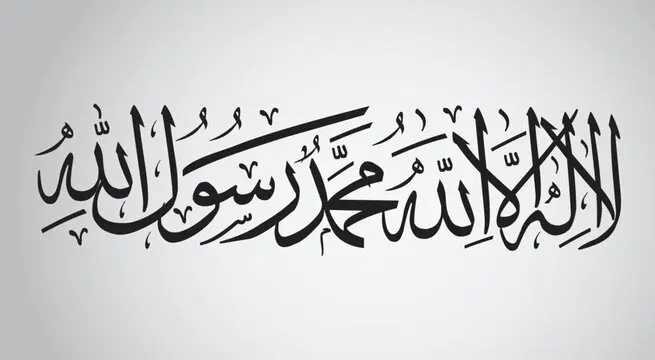
لَا اِلٰهَ اِلَّا اللهُ مُحَمَّدٌ رَّسُوْلُ اللهِ
If you read it slowly, you can feel the strength in every word. It says, “There is no god but Allah, and Muhammad is the Messenger of Allah.” That is the heart of Islam. This is why the 1st Kalma in Arabic is the first thing children learn when they begin their religious journey, and often the last thing Muslims wish to say before leaving this world.
What makes the 1st Kalma in Arabic text so special is its unity. A Muslim in Pakistan, another in Turkey, and one in Africa may not share the same language, food, or culture, but when they recite this Kalma, they all sound the same. It feels like one voice spread across the world.
Many people also find comfort in repeating the 1st Kalma during prayer or even in quiet moments of the day. It is more than just a set of words. It is a reminder that life has meaning, that Allah is always present, and that following the way of the Prophet brings peace.
When you look at the Arabic script itself, it has a kind of beauty that is hard to put into words. Calligraphers write the 1st Kalma in different styles, decorating mosques, homes, and books. But whether you see it in art or hear it in prayer, the 1st Kalma in Arabic always carries the same message: pure faith in one God.
1st Kalma in English
When people look for the 1st Kalma in English, they often want to understand its meaning in simple words. The English translation of the 1st Kalma is:
“There is no god but Allah, Muhammad is the Messenger of Allah.”
This is the english translation of 1st kalma, and it explains the basic belief of Islam in a way that anyone can understand. Muslims who do not speak Arabic often learn the 1st Kalma in English first so they can connect with the message. Reading or hearing the 1st kalma english translation reminds us that Islam begins with the acceptance of one God and His Messenger.
The 1st Kalma in English is not long or complicated, yet it has a powerful impact. It is often the first step for new Muslims when they take the declaration of faith (Shahada). With these words, they enter into Islam and become part of the global Muslim community.
1st Kalma with Urdu Translation
For Muslims in South Asia, learning the 1st kalma with urdu translation is common. It helps children and adults not only repeat the words but also grasp the meaning. The Urdu translation is:
“اللّٰہ کے سوا کوئی معبود نہیں، محمد ﷺ اللہ کے رسول ہیں۔”
This translation of 1st kalma in urdu is short but carries a message of belief and obedience. Families often write it on charts for children, and teachers make sure students memorize it in both Arabic and Urdu. Having the 1st kalma urdu translation makes it easier for people to reflect on its meaning in their daily lives.
When we talk about 1st kalma meaning in urdu, it is a direct reminder of Tawheed (the oneness of Allah) and Risalat (the Prophethood of Muhammad, peace be upon him). Saying it with understanding makes the heart stronger in faith.
Meaning of 1st Kalma
The 1st Kalma meaning goes beyond words. It is not only a statement but also a foundation on which the whole religion of Islam stands. When someone recites the Kalma Tayyaba, they are making a clear declaration: Allah alone is worthy of worship, and Prophet Muhammad (peace be upon him) is His final Messenger.
The meaning of 1st kalma is simple yet powerful. It teaches Tawheed, the belief in the oneness of Allah. This means no one shares His power, no one shares His right to be worshipped, and no one stands equal to Him. It also affirms Risalat, the Prophethood of Muhammad (peace be upon him). Believing in him is essential, because he brought Allah’s final message to mankind.
Understanding this meaning changes how a Muslim sees life. It guides how we pray, how we act with others, and how we deal with challenges. For example, when someone says “La ilaha illallah,” they remind themselves that help, success, and peace come only from Allah. When they say “Muhammadur Rasulullah,” they remember that following the Sunnah of the Prophet is the way to live that faith in daily life.
Many scholars say that the 1st Kalma is like the door to Islam. Without accepting it, one cannot truly enter the religion. But when someone believes in its meaning with sincerity, even if they have not mastered every detail of Islam, they are still counted among the believers.
The 1st Kalma meaning is not just history or theory. It is a living reminder. Every time we recite it, we renew our bond with Allah and strengthen our place in the path of faith.
1st Kalma in Quran and Islam
When we talk about the 1st Kalma in Quran and Islam, we find that it captures the core of the entire faith. The words “La ilaha illallah Muhammadur Rasulullah” may not appear in the Quran as one complete line, but their meaning is found in many verses. The Quran again and again reminds us that Allah is One and that Prophet Muhammad (peace be upon him) is His Messenger.
This makes the 1st Kalma of Islam more than just a phrase. It is the declaration of faith, also known as the Shahada. Every Muslim begins their journey with it, and it stays with them until the end of life. From the first day a child learns to speak about Allah, to the last breath of a believer, the Kalma Tayyaba remains on their tongue.
The 1st Kalma Islam teaches two important truths:
- Worship belongs only to Allah.
- Prophet Muhammad (peace be upon him) is the one who showed us how to live by that worship.
Together, these truths make the backbone of Islamic belief. Without them, a person cannot be counted as a Muslim.
When you read the Quran, you will notice how it builds on these two parts of the Kalma. Verses like Surah Al-Ikhlas (Chapter 112) focus fully on the oneness of Allah, while other verses remind us to follow the Messenger and obey his guidance.
This is why the 1st Kalma in Quran and Islam is not just something we memorize in childhood. It is a lifelong commitment. It shapes how we see the world, how we worship, and how we treat others.
When to Recite Kalma Tayyaba
The beauty of the Kalma tayyaba is that it can be recited at any time. Muslims often say it during prayer, before sleeping, after waking up, or in moments of stress and fear. Parents encourage children to repeat it daily so that the words become part of their memory and heart. Many Muslims also recite the first Kalma when they want to seek forgiveness, renew their faith, or feel closer to Allah.
There is no fixed number or special time required, but scholars recommend saying it as often as possible. The more we recite the 1st Kalma, the stronger our belief becomes.
Importance of First Kalma
The importance of the 1st Kalma cannot be measured in words. It is the first step into Islam, and without it, there is no entry into the faith. The Kalma Tayyaba confirms two main pillars: the oneness of Allah (Tawheed) and the Prophethood of Muhammad (peace be upon him).
This declaration separates a Muslim from disbelief and brings them into the circle of faith. It is also the first teaching for children and the final words many Muslims wish to say before death. Its importance lies in the fact that it connects the believer directly with Allah, without any partner or equal.
Benefits of Reciting Kalma Tayyaba
Reciting the first Kalma is not only an act of worship but also a source of peace for the heart. Some of the benefits include:
- Strengthening faith: Every time a Muslim repeats the Kalma, they renew their belief.
- Peace of mind: Saying it during stress or fear brings calmness and reliance on Allah.
- Protection: Many believe that remembering Allah through the Kalma shields the heart from doubts and evil.
- Forgiveness: It is a way of seeking mercy, as the Prophet (peace be upon him) encouraged frequent remembrance of Allah.
- Blessings in life and afterlife: Holding firmly to the Kalma ensures success in both worlds.
The advantages of reciting the 1st Kalma are not just spiritual but also emotional. It reminds a believer that they are never alone, that Allah is always near, and that following the Messenger is the key to true guidance.
Final Thoughts on First Kalma
The Kalma Tayyaba is more than just a short sentence to memorize. It is the heart of Islam, a simple but powerful reminder that there is no god but Allah and Muhammad (peace be upon him) is His Messenger. Reciting the Kalma Tayyaba keeps a Muslim connected to faith, but truly understanding it brings a deeper sense of peace and purpose.
When we say the Kalma Tayyaba with meaning in our hearts, it changes the way we live. It guides our prayers, our choices, and even how we face challenges. Just repeating it without reflection may bring blessing, but learning its meaning adds light to our actions and strengthens our bond with Allah.
That is why teachers, parents, and scholars always encourage Muslims to not only recite but also understand. The 1st Kalma is the first step of belief, and by holding on to it with sincerity, we keep ourselves on the straight path.
So, whether you are teaching it to children or reminding yourself in daily life, make sure the words are felt, not just spoken. The 1st Kalma is the key to faith, and when lived with understanding, it becomes the key to peace in this life and the next.
.
👉 Strengthen your faith with guided learning join our Online Quran Classes and book a free trial today.
Explore:
- Online Quran Classes
- Tajweed Course
- Quran for Beginners
- Free Trial / Contact Us